Chinese Drywall
2011-12-02
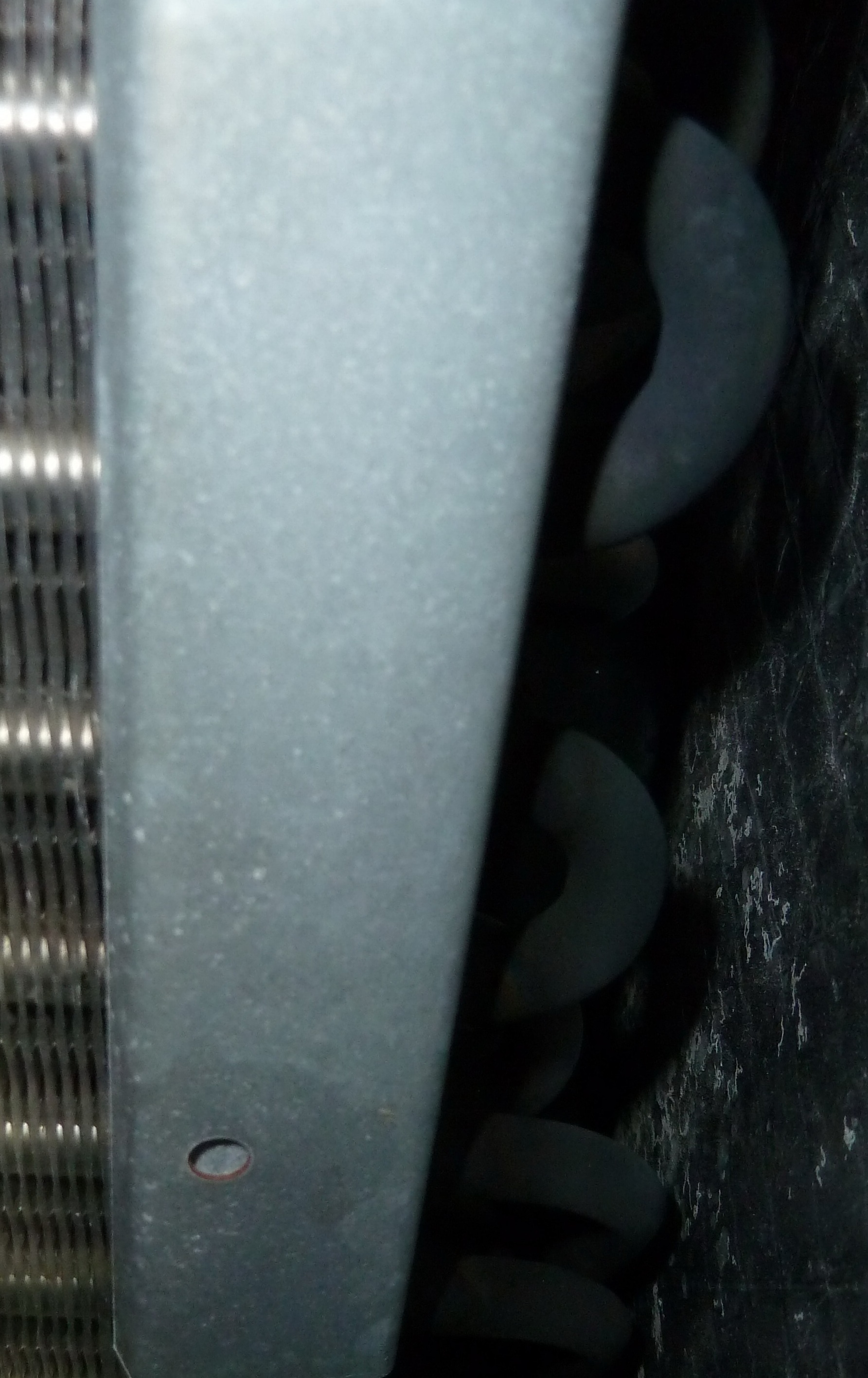 'Chinese drywall' generally refers to defective, or 'problem' drywall that was installed in numerous businesses and homes throughout the United States from approximately 2001 to 2009. The affected drywall is suspected to contain contaminants which emit gases. These gases are suspected to be a concern to human health and cause corrosion of metals within the home. The symptoms of problem drywall may not manifest until months or years after the installation of the defective drywall. Common indicators of defective drywall are corroded or blackened copper plumbing, AC coils, electrical wiring, and chrome fixtures. A sulfur or other smell is another common complaint.
At a minimum, a professional inspection for possible 'Chinese drywall' should include the following:
'Chinese drywall' generally refers to defective, or 'problem' drywall that was installed in numerous businesses and homes throughout the United States from approximately 2001 to 2009. The affected drywall is suspected to contain contaminants which emit gases. These gases are suspected to be a concern to human health and cause corrosion of metals within the home. The symptoms of problem drywall may not manifest until months or years after the installation of the defective drywall. Common indicators of defective drywall are corroded or blackened copper plumbing, AC coils, electrical wiring, and chrome fixtures. A sulfur or other smell is another common complaint.
At a minimum, a professional inspection for possible 'Chinese drywall' should include the following:
1. Determining the age of the home and past renovations or repairs to determine if drywall was installed between 2001 and 2009. The latest date of problem drywall installation is sometimes reported as early as 2007, but 2009 is a safer estimate based on the possible use of contaminated inventory.
2. Examination of the AC copper evaporator coils and exposed plumbing pipes at the interior or attic of a home for blackening or corrosion. Previous leaks or replacement of AC coils or copper pipes should be considered.
3. Removal of a number of electrical outlet and switch plates throughout the home in order to examine the exposed wiring and switches for blackening or corrosion. Inspection of electric panel for same. Safety measures should obviously be taken prior to accessing electrical equipment.
4. Attempting to detect an odor at the interior consistent with problem drywall (sulfur, sweet, or ammonia smells are commonly reported).
5. Inspection of exposed bathroom and kitchen metal or chrome fixtures for corrosion.
6. Attic inspection to observe the upper, unfinished face of ceiling drywall to determine the drywall manufacturer, if possible. This often requires the temporary removal of small portions of ceiling insulation. A mini-scope may be used to examine the back of drywall installed at interior walls.
7. Consideration of drywall or air sample testing if conditions warrant.
Finding no drywall that is stamped "Made in China" does not eliminate the possibility of problem drywall existing within a home. This is because different drywall may exist at different locations throughout the home. In addition, drywall made in China may not be stamped as such. Similarly, finding drywall stamped "Made in China" does not necessarily mean that a problem exists with that particularly drywall. The exact nature and cause of the contaminant(s) and potential health ramifications are undetermined and approved remediation protocols have not been fully developed as of this writing. The Florida Department of Health (FDOH) website: http://www.doh.state.fl.us/environment/community/indoor-air/casedefinition.html#presence contains the following information with regards to “drywall associated corrosion in residences”. The following discussion, criteria, odors and symptoms, and remediation are taken from the FDOH website: _____________________________________________________________________________ This revision of the 03-31-09 Case Definition reflects our current understanding of this emerging problem and the results of recently released information regarding corrosive drywall testing. The sole purpose of this case definition is to help identify homes that are affected by corrosion associated with drywall emissions. The case definition is NOT intended to evaluate the health risks for occupants or to evaluate occupant exposures to corrosive emissions. This case definition is NOT regulatory in nature or required to be used by those inspecting homes. This case definition is provided to the public for informational purposes only and its use is strictly voluntary. Adoption of this case definition for purposes beyond its intended use is at the risk of the user. Criteria to demonstrate that a home is not affected by corrosive drywall emissions may require a different approach and inspection criteria that are not described in this document. This version of the case definition enables the user to rank homes as a possible, probable, or confirmed case. Homes that exhibit the sentinel indicators of drywall associated corrosion are defined as possible cases. All three sentinel indicators of Criteria 1 must be met for the home to be considered as a possible case. Criteria that define a probable or confirmed case are described in later sections. Criteria 1: (For Homeowners) Sentinel Indicators of Drywall Associated Corrosion (Possible Case = all 3)1. The home was constructed or renovated with new drywall since 2001.
2. Observed corrosion of air conditioner evaporator coil exemplified by black corrosion on copper tubing components. The corrosion can result in refrigerant leakage making it impossible to cool the home requiring coil replacement. Coil failures indicative of this problem typically occur every 6-14 months
3. Observed metal corrosion, indicated by blackening of one or more of the following:
◦ copper wires, ground wires, and electrical components
◦ un-insulated and uncoated pipes and fittings
◦ chrome-plated bathroom fixtures
◦ silver and copper jewelry
◦ mirror backing in bathrooms
If you have answered yes to all three of the above indicators, the home meets the criteria for “possible case”. Continue to Criteria 2 or 3 only if home meets the criteria for “possible case”. Trained professionals performing home assessments based upon this case definition should use their experience, training, and professional judgment to establish their inspection procedures and sampling strategies. Professional judgment is necessary to determine the number of samples and weight of evidence needed to meet each set of criteria. A trained professional, not the homeowner, should conduct inspections and testing described in Criteria 2 and 3. Criteria 2: (For Trained Professionals) Supporting Indicators of Drywall Associated Corrosion (Probable Case = 1 or more)1. Observed markings on the back of drywall indicating the country of origin is China.
2. Objective analysis of drywall in home finds Strontium levels exceed 2,000 mg/kg (ppm), indicating the gypsum used in the drywall was probably mined in China. Analytical methods commonly used for this include XRF and ICP.
If you have met the criteria for “possible case” and answered yes to at least one of the above indicators in Criteria 2, the home meets the criteria for “probable case”. These criteria do not confirm that the drywall causes corrosion. Identifying the origin of the drywall is considered a screening tool for suspect drywall, but confirmation requires analysis described in Criteria 3. Criteria 3: (For Trained Professionals) Confirmatory Evidence of Drywall Associated Corrosion (Confirmed Case = 1 or more)1. Elemental sulfur (Orthorhombic sulfur, cyclooctasulfur, S8) content of gypsum core exceeding 10 mg/kg (ppm), indicating the gypsum in drywall samples from the home contains the source material that is believed to contribute to the reduced sulfur gases emitted from corrosive drywall. Analytical methods commonly used for this include GC/ECD, GC/MS, or HPLC.
2. Laboratory analysis of suspected drywall headspace for reduced sulfur gas emissions (H2S, COS, CS2) indicating drywall samples from the home emit reduced sulfur gases capable of causing copper corrosion. Analytical methods commonly used for this include GC/SCD. Results that are indicative of corrosive drywall must be established by each laboratory based upon internal procedures, comparison to control samples, and validated methods.
3. Qualitative analysis of suspect drywall for its ability to cause corrosion/blackening of copper under controlled conditions, indicating drywall samples from the home emit gases capable of corroding copper. Results that are indicative of corrosive drywall must be established by each laboratory based upon internal procedures, comparison to control samples, and validated methods.
If you have met the criteria for “possible case”, ruled out other sources of hydrogen sulfide as significant contributors to copper corrosion in the home, and receive positive results on a sufficient number of samples from one or more of the above evaluations in Criteria 3, the home meets the criteria for a “confirmed case”. Some confounding factors that should be excluded as causes of observed corrosion are hydrogen sulfide from well water, sewer gas, or soil gas. Odors and Symptoms- Use of odors as an indicator of drywall associated corrosion is limited. Odors have not been reported in all homes exhibiting drywall associated corrosion.
- Occupant reported health symptoms have limited use in identifying homes with drywall associated corrosion. The symptoms reported by occupants are not unique or consistent across affected homes.
- Documenting the presence of odors and/or occupant symptoms may be important to public health agencies, but their relationship to the presence or absence of drywall associated corrosion in homes remains unclear.
(a) Blackening of copper electrical wiring and/or air conditioning evaporator coils; and
(b) The installation of new drywall (for new construction or renovations) between 2001 and 2008.
A positive result for this step (including both criteria) is a prerequisite to any further consideration. Step 2: Corroborating Evidence Because it is possible that corrosion of metal in homes can occur for other reasons, it is important to obtain additional corroborating evidence of problem drywall. Homes with the characteristic metal corrosion problems must also have at least two of these corroborating conditions if the new drywall was installed between 2005 and 2008. For installations between 2001 and 2004 at least four of the following conditions must be met. Collecting evidence of these corroborating conditions will in some cases require professional assessors and/or testing by analytical laboratories.(a) Elemental sulfur levels in samples of drywall core found in the home exceeding 10 ppm;
(b) Corrosive conditions in the home, demonstrated by the formation of copper sulfide on copper coupons (test strips of metal) placed in the home for a period of two weeks to 30 days, or confirmation of the presence of sulfur in the blackening of the grounding wires and/or air conditioning coils;
(c) Confirmed markings of Chinese origin for drywall in the home;
(d) Elevated levels of hydrogen sulfide, carbonyl sulfide, and/or carbon disulfide emitted from samples of drywall from the home when placed in test chambers using ASTM Standard Test Method D5504-08 or similar chamber or headspace testing;
(e) Corrosion of copper metal to form copper sulfide when copper is placed in test chambers with drywall samples taken from the home.
_____________________________________________________________________________