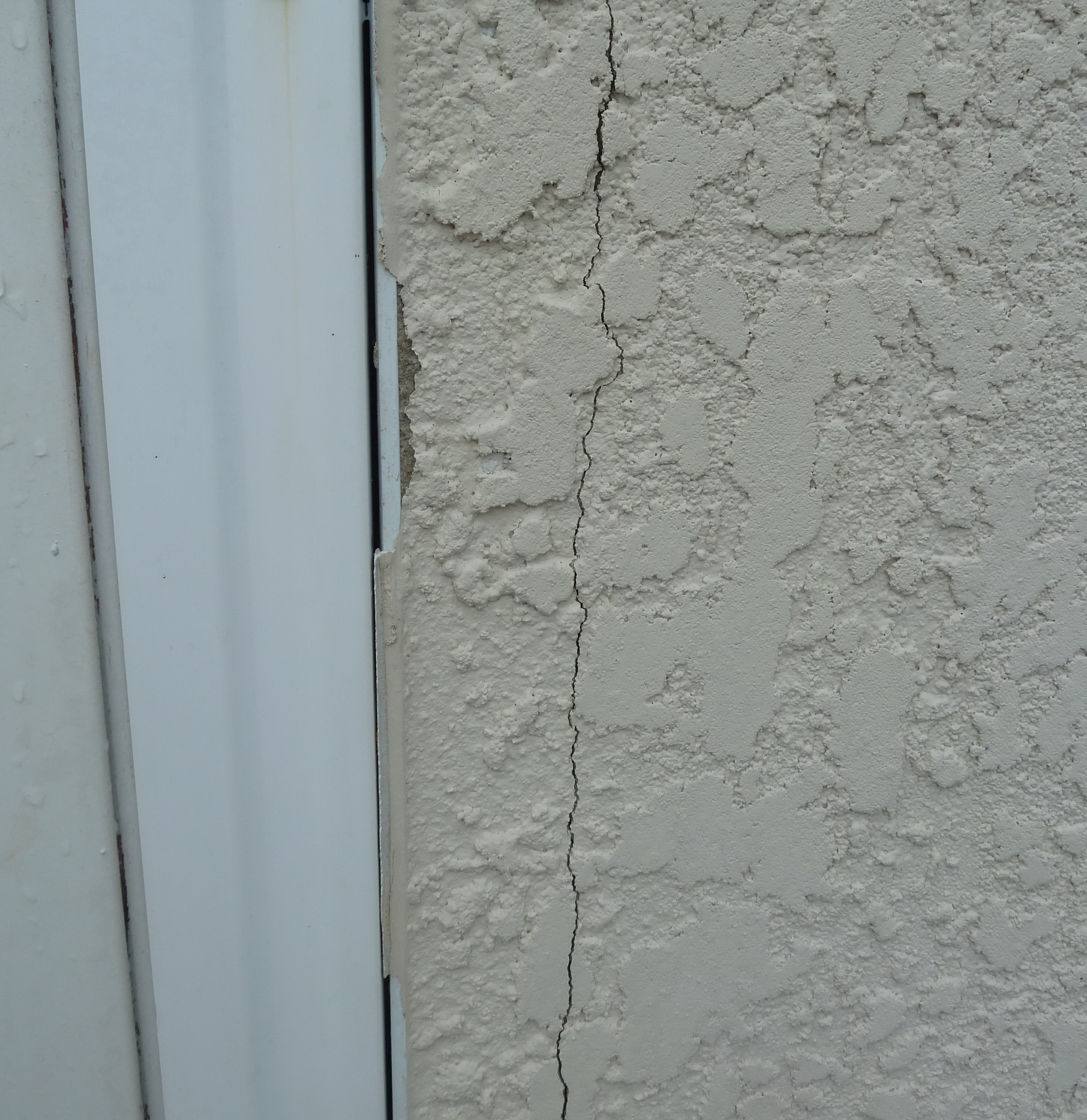
Cracks at Interface Between Two Dissimilar Materials
2011-11-16
Cracks at an interface between two dissimilar materials are common. These cracks often occur due to thermal movement, shrinkage or swelling due to varying moisture content, normal deflection due to applied loads, other environmental effects, or a combination of these. Different materials move differently as the result of these factors, and this differential movement between two adjacent materials causes cracks. While they are unsightly and may increase susceptibility to water intrusion, cracks that occur for these reasons are often not a cause for structural concern. The effects of significant deflection, settlement, rot, or other potentially serious structural problems are not considered here.
The frequency and size of these cracks depend largely on the materials involved, the method and quality of construction, and the type of affected (cracked) finish. Adjacent materials with greater differences in properties (wood-CMU) are more likely to be affected than more similar adjacent materials (concrete-CMU). High quality materials combined with proper construction techniques minimize or even eliminate such cracks. Brittle finishes (such as stucco) crack more frequently than more flexible finishes (such as wood paneling).
The following photograph shows a vertical crack in exterior stucco. The crack is located directly over the interface between a wood door buck and CMU.