Cracks at Interior Drywall
2011-11-19
Drywall, also called sheetrock or gypsum board, is widely used for interior walls and ceilings because it
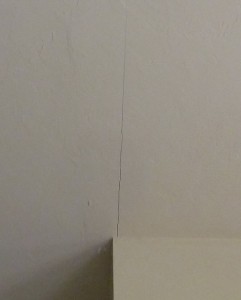 Not all drywall cracks are a cause for structural concern. In fact, most are not. Drywall is susceptible to cracking due to improper support preparation, installation, loss of support, or movement of the supporting structure. Improper support may be loose or misaligned studs or other framing members. Problems with installation include improper fastener spacing, not enough or improperly mixed compound, etc. Movement of the supporting structure may occur due to normal flexing of the structure under service loads. Drywall cracking movement may also be caused by normal thermal or moisture-related shrinkage or swelling of the wood studs or other support members relative to the drywall itself.
Drywall cracks also occur due to significant movement of a wall, ceiling, or other structure and may be an indication of a structural problem. Such cracks are usually wider and/or have significant differential movement across the crack. Cracks that exist with matching profile at both the inside and outside (exterior CMU, stucco, etc.) of a wall may also be cause for concern.
ADDITIONAL RESOURCES:
Drywall Finishing Council - Problems and Solutions
Not all drywall cracks are a cause for structural concern. In fact, most are not. Drywall is susceptible to cracking due to improper support preparation, installation, loss of support, or movement of the supporting structure. Improper support may be loose or misaligned studs or other framing members. Problems with installation include improper fastener spacing, not enough or improperly mixed compound, etc. Movement of the supporting structure may occur due to normal flexing of the structure under service loads. Drywall cracking movement may also be caused by normal thermal or moisture-related shrinkage or swelling of the wood studs or other support members relative to the drywall itself.
Drywall cracks also occur due to significant movement of a wall, ceiling, or other structure and may be an indication of a structural problem. Such cracks are usually wider and/or have significant differential movement across the crack. Cracks that exist with matching profile at both the inside and outside (exterior CMU, stucco, etc.) of a wall may also be cause for concern.
ADDITIONAL RESOURCES:
Drywall Finishing Council - Problems and Solutions
- provides a smooth surface that is easy to paint
- is widely available
- is relatively inexpensive and easy to install
- provides excellent fire resistance
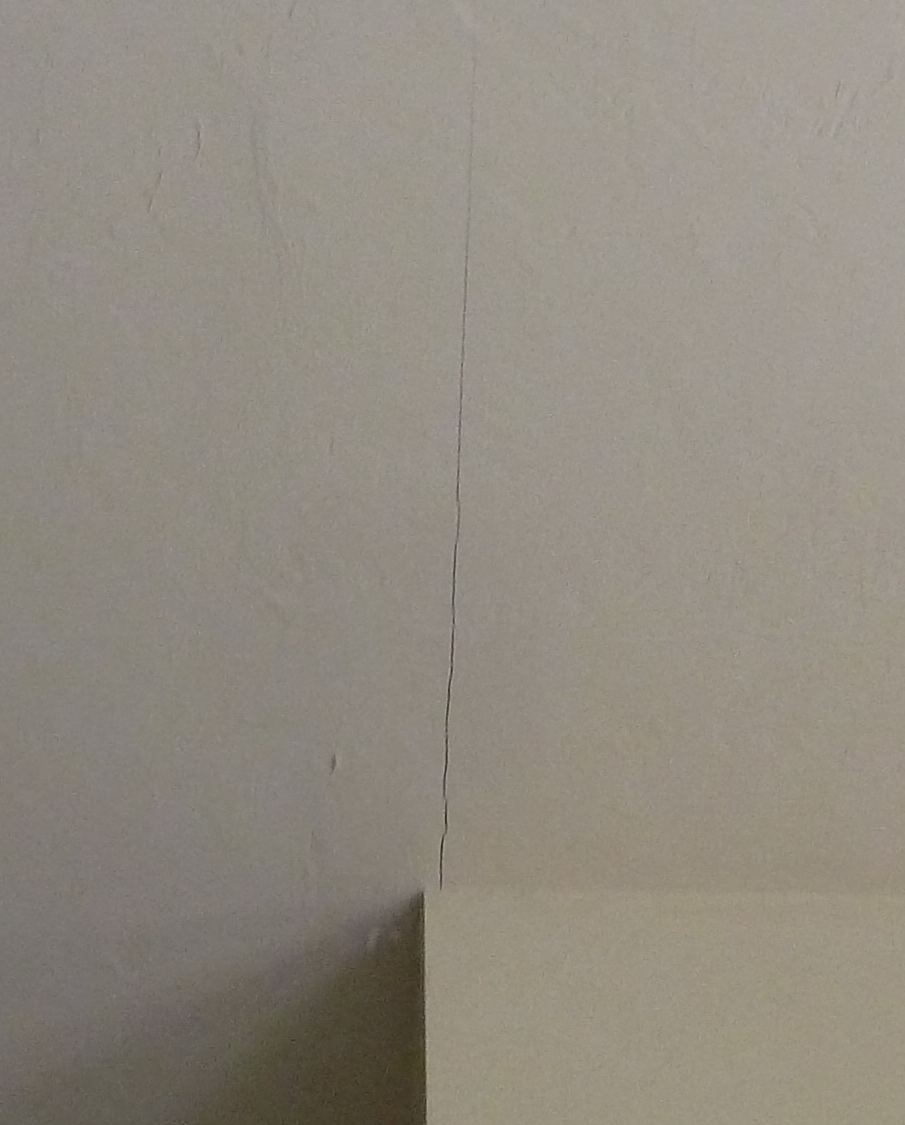 Not all drywall cracks are a cause for structural concern. In fact, most are not. Drywall is susceptible to cracking due to improper support preparation, installation, loss of support, or movement of the supporting structure. Improper support may be loose or misaligned studs or other framing members. Problems with installation include improper fastener spacing, not enough or improperly mixed compound, etc. Movement of the supporting structure may occur due to normal flexing of the structure under service loads. Drywall cracking movement may also be caused by normal thermal or moisture-related shrinkage or swelling of the wood studs or other support members relative to the drywall itself.
Drywall cracks also occur due to significant movement of a wall, ceiling, or other structure and may be an indication of a structural problem. Such cracks are usually wider and/or have significant differential movement across the crack. Cracks that exist with matching profile at both the inside and outside (exterior CMU, stucco, etc.) of a wall may also be cause for concern.
ADDITIONAL RESOURCES:
Drywall Finishing Council - Problems and Solutions
Not all drywall cracks are a cause for structural concern. In fact, most are not. Drywall is susceptible to cracking due to improper support preparation, installation, loss of support, or movement of the supporting structure. Improper support may be loose or misaligned studs or other framing members. Problems with installation include improper fastener spacing, not enough or improperly mixed compound, etc. Movement of the supporting structure may occur due to normal flexing of the structure under service loads. Drywall cracking movement may also be caused by normal thermal or moisture-related shrinkage or swelling of the wood studs or other support members relative to the drywall itself.
Drywall cracks also occur due to significant movement of a wall, ceiling, or other structure and may be an indication of a structural problem. Such cracks are usually wider and/or have significant differential movement across the crack. Cracks that exist with matching profile at both the inside and outside (exterior CMU, stucco, etc.) of a wall may also be cause for concern.
ADDITIONAL RESOURCES:
Drywall Finishing Council - Problems and Solutions