Cracks in Stucco over Wood Framing
2011-11-04
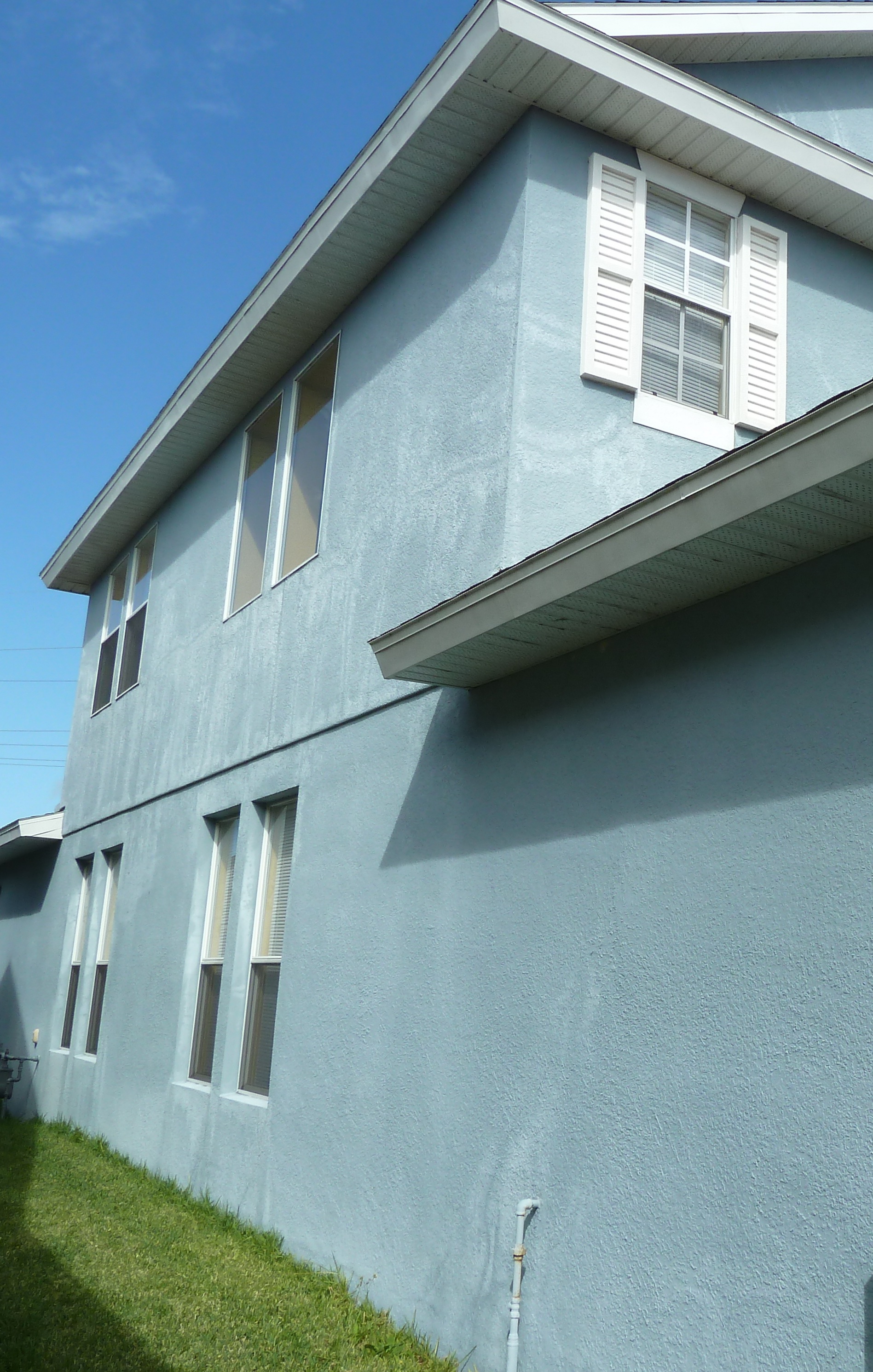 Traditional stucco, or exterior plaster, is widely used as a final wall finish, and is often applied directly over concrete masonry unit (CMU) or over wood sheathing with paper and metal lath. As a mixture of lime and sand, stucco has been in use for thousands of years. Modern traditional stucco consists of Portland cement and sand, with lime sometimes added to increase workability, elasticity, vapor exchange, and other qualities.
The focus of this discussion is cement-based stucco placed using paper and metal lath over exterior wood framing. Cracking may occur with this type of stucco installation due to problems with materials, installation, protection, or a combination of these factors. Exterior insulation and finishing systems (EIFS), also referred to as synthetic stucco, are not considered here.
Problems with materials and installation may involve the wood sheathing, the paper and metal lath, the stucco itself, or a combination of these. Plywood and orientated strand board (OSB) sheathing should be of sufficient thickness and supported/blocked properly to provide a rigid base for the stucco. Gaps (typically 1/8 inch) should exist between the sheathing panels to allow for expansion due to moisture and thermal movement. The building paper between the metal lath and the sheathing should be vapor permeable but water resistant, and properly lapped. Lath should be of the correct style and weight for the specific application, and properly lapped, orientated, and fastened. Metal lath used at exterior applications should be hot dipped galvanized for corrosion protection. The stucco itself should be properly mixed, applied with even and sufficient thickness, and correctly embed the lath.
Stucco and the underlying structure are protected over the long term through the proper use of accessories, control joints, flashings and sealants. The improper selection or installation of these may lead to moisture intrusion, cracking, corrosion, or other problems. Accessories are used to isolate dissimilar materials, absorb movement, create aesthetic and functional corners or penetrations, etc. Control joints are accessories used to isolate individual areas of stucco so that shrinkage and deflection movement restraint and the associated cracking is minimized.
ASTM C 1063 Standard Specification for Installation of Lathing and Furring to Receive Interior and Exterior Portland Cement-Based Plaster requires that control joints be placed such that individual wall areas do not exceed 144 square feet, and individual ceiling areas do not exceed 100 square feet. This ASTM also requires that the distance between control joints not exceed 18 feet, and the ratio of length to width not exceed 2.5. Flashings and sealants direct water away from the structure and thereby prevent it from entering. Paint may be considered a stucco sealant, and is important for the long-term protection of stucco over wood framing.
Wood frame walls normally deflect under service loads, and shrink and swell due to moisture and thermal cycles. This movement, together with shrinkage in the stucco itself, may produce micro cracks in the stucco. Over time, especially in the absence of proper sealing, these cracks grow larger and become a source of moisture penetrating the stucco. Eventually, this may result in the embedded metal lath becoming exposed to both moisture and oxygen, allowing eventual corrosion of the lath. Steel expands when corroded, and this expansion creates additional tensile stress in the stucco. This stress exacerbates and widens the existing stucco cracks, beginning a vicious cycle of additional moisture intrusion, lath corrosion and crack growth.
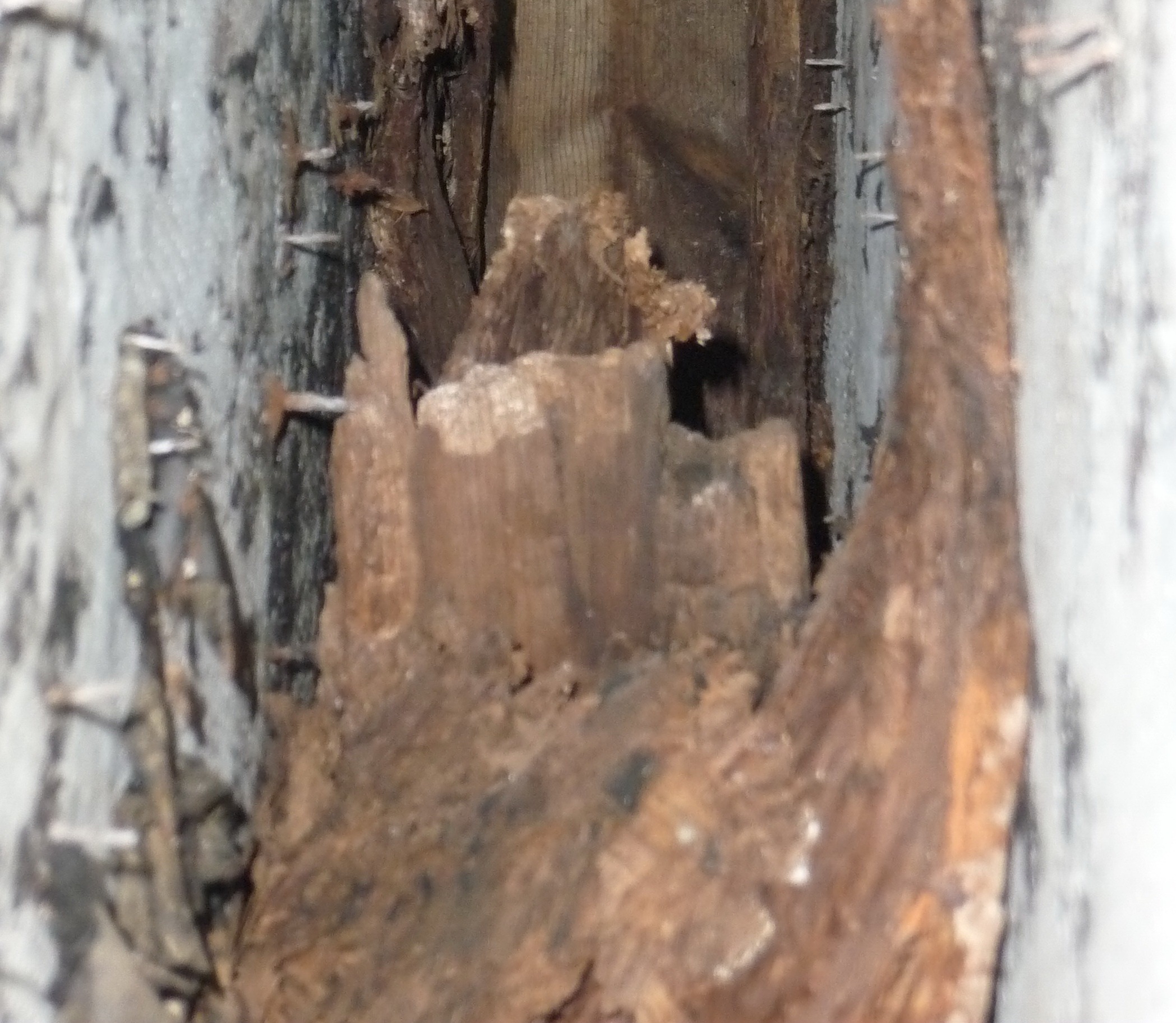
This process eventually leads to the wood substrate being exposed to moisture. Plywood and OSB exposed to moisture may delaminate or swell dramatically, which leads to further cracks in the stucco. Wood exposed to long-term moisture is also susceptible to rot. As this process continues and worsens, the stucco may buckle or spall due to lath corrosion, wood swelling, loss of support due to rot, or a combination of these.
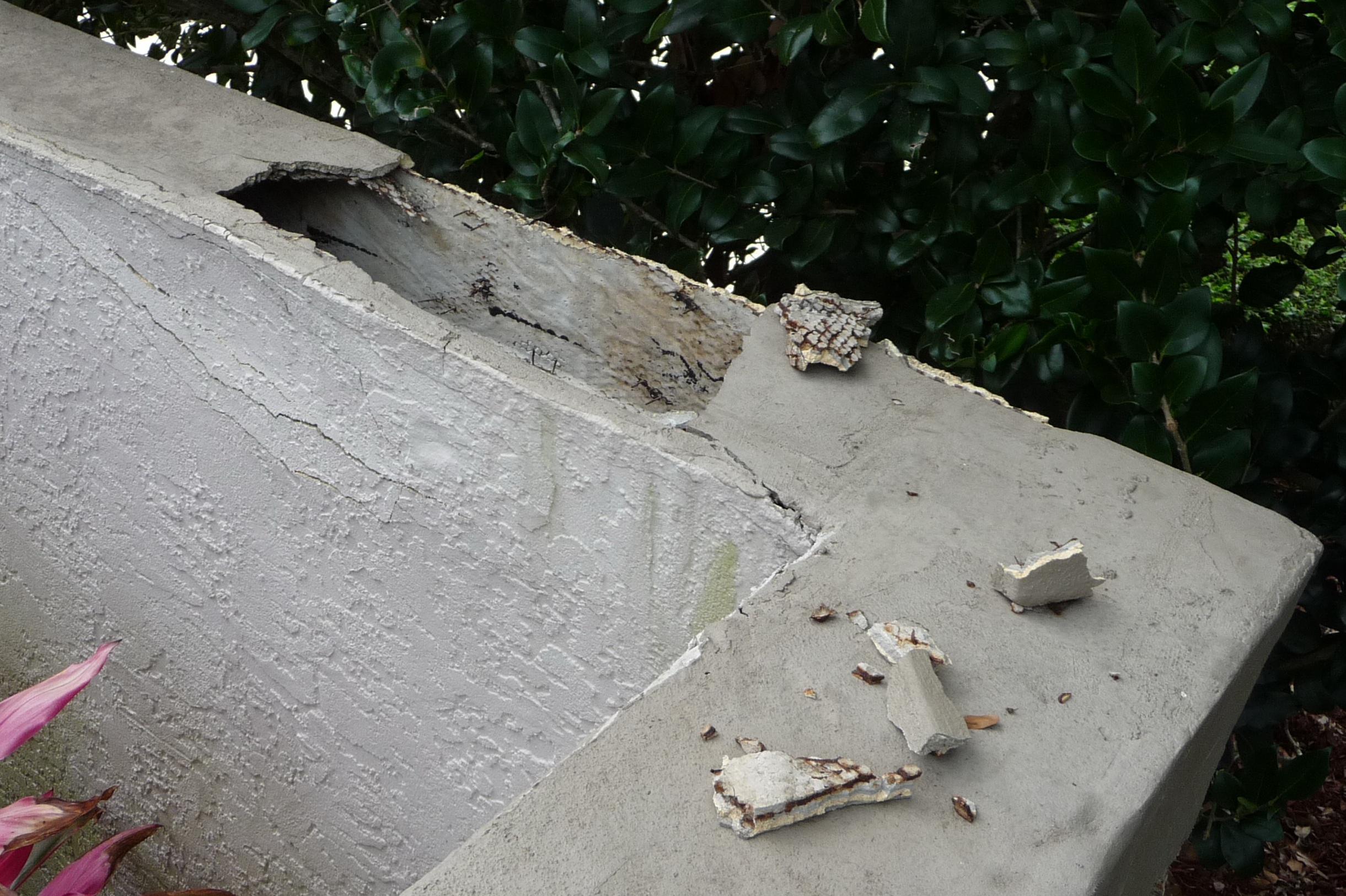
The following photograph shows an area of stucco collapsed at the top of a wood-framed exterior privacy wall:
Traditional stucco, or exterior plaster, is widely used as a final wall finish, and is often applied directly over concrete masonry unit (CMU) or over wood sheathing with paper and metal lath. As a mixture of lime and sand, stucco has been in use for thousands of years. Modern traditional stucco consists of Portland cement and sand, with lime sometimes added to increase workability, elasticity, vapor exchange, and other qualities.
The focus of this discussion is cement-based stucco placed using paper and metal lath over exterior wood framing. Cracking may occur with this type of stucco installation due to problems with materials, installation, protection, or a combination of these factors. Exterior insulation and finishing systems (EIFS), also referred to as synthetic stucco, are not considered here.
Problems with materials and installation may involve the wood sheathing, the paper and metal lath, the stucco itself, or a combination of these. Plywood and orientated strand board (OSB) sheathing should be of sufficient thickness and supported/blocked properly to provide a rigid base for the stucco. Gaps (typically 1/8 inch) should exist between the sheathing panels to allow for expansion due to moisture and thermal movement. The building paper between the metal lath and the sheathing should be vapor permeable but water resistant, and properly lapped. Lath should be of the correct style and weight for the specific application, and properly lapped, orientated, and fastened. Metal lath used at exterior applications should be hot dipped galvanized for corrosion protection. The stucco itself should be properly mixed, applied with even and sufficient thickness, and correctly embed the lath.
Stucco and the underlying structure are protected over the long term through the proper use of accessories, control joints, flashings and sealants. The improper selection or installation of these may lead to moisture intrusion, cracking, corrosion, or other problems. Accessories are used to isolate dissimilar materials, absorb movement, create aesthetic and functional corners or penetrations, etc. Control joints are accessories used to isolate individual areas of stucco so that shrinkage and deflection movement restraint and the associated cracking is minimized.
ASTM C 1063 Standard Specification for Installation of Lathing and Furring to Receive Interior and Exterior Portland Cement-Based Plaster requires that control joints be placed such that individual wall areas do not exceed 144 square feet, and individual ceiling areas do not exceed 100 square feet. This ASTM also requires that the distance between control joints not exceed 18 feet, and the ratio of length to width not exceed 2.5. Flashings and sealants direct water away from the structure and thereby prevent it from entering. Paint may be considered a stucco sealant, and is important for the long-term protection of stucco over wood framing.
Wood frame walls normally deflect under service loads, and shrink and swell due to moisture and thermal cycles. This movement, together with shrinkage in the stucco itself, may produce micro cracks in the stucco. Over time, especially in the absence of proper sealing, these cracks grow larger and become a source of moisture penetrating the stucco. Eventually, this may result in the embedded metal lath becoming exposed to both moisture and oxygen, allowing eventual corrosion of the lath. Steel expands when corroded, and this expansion creates additional tensile stress in the stucco. This stress exacerbates and widens the existing stucco cracks, beginning a vicious cycle of additional moisture intrusion, lath corrosion and crack growth.
This process eventually leads to the wood substrate being exposed to moisture. Plywood and OSB exposed to moisture may delaminate or swell dramatically, which leads to further cracks in the stucco. Wood exposed to long-term moisture is also susceptible to rot. As this process continues and worsens, the stucco may buckle or spall due to lath corrosion, wood swelling, loss of support due to rot, or a combination of these.
The following photograph shows an area of stucco collapsed at the top of a wood-framed exterior privacy wall: