Hydrostatic Failure of In-Ground Pool or Spa
2011-12-03
 Hydrostatic forces have the potential to cause significant damage to an in-ground pool or spa. In saturated soils, in-ground shells are susceptible to this type of failure after they are fully or partially emptied. This is because of the potential for hydrostatic forces to overcome the weight of the buried pool or spa and other restraining forces.
When an object is submerged in a liquid, the upward force on the object is equal to the weight of the liquid displaced. This force is opposed by the weight of the object, including the weight of whatever the object contains. The same principle applies to a pool or spa shell buried in saturated soil. Under normal conditions, the shell is filled with water. The weight of the water and shell along with other restraining effects counteract the buoyancy effect of the saturated soil, and the shell remains in place. However, if the shell is empty when the surrounding soil is saturated, the hydrostatic uplift force can force the shell upward, even out of the ground. This usually results in cracks and other damage to the adjacent components, including decks, supply and drain lines, etc. Failures of this type are often more severe at the deep end of the shell, for obvious reasons.
Fiberglass shells are susceptible to this type of failure due to their relative low weight but even heavier concrete shells have the potential to fail in this manner. Hydrostatic forces, together with soil weight, may also cause the sides of a fiberglass or vinyl lined panel pool shell to deflect inward when the pool is emptied. When the pool is full, water in the pool opposes the lateral forces of the soil and water surrounding the pool shell. The opposing hydrostatic force is not present when the pool is emptied.
Hydrostatic valves and drain pipes are sometimes used to help prevent a hydrostatic failure. A hydrostatic relief or check valve is often placed at or in the main pool drain. The purpose of this valve is to equalize pressure between the water beneath the pool and water at the bottom of the pool. Should the water pressure beneath the pool substantially surpass the water pressure at the bottom of the pool, the valve is supposed to open, allowing water beneath the pool to flow into the pool bottom. A murky or dark cloud near the pool drain may indicate recent relief valve activity. Some installers report a high potential for problems with this type of valve. Reported problems include the valve being stuck open and draining the pool or failure of the valve to open when needed to relieve high pressure beneath the pool shell.
Alternatively, a line may be provided from an area of aggregate beneath the pool shell during the original pool construction. When the pool is to be emptied, this line is used to draw water out of the area beneath the pool, thus reducing pressure. If an in-ground pool is to be emptied, a professional should be hired to assist due to the risk of hydrostatic failure. This is particularly true during rainy seasons or when dealing with an older fiberglass shell.
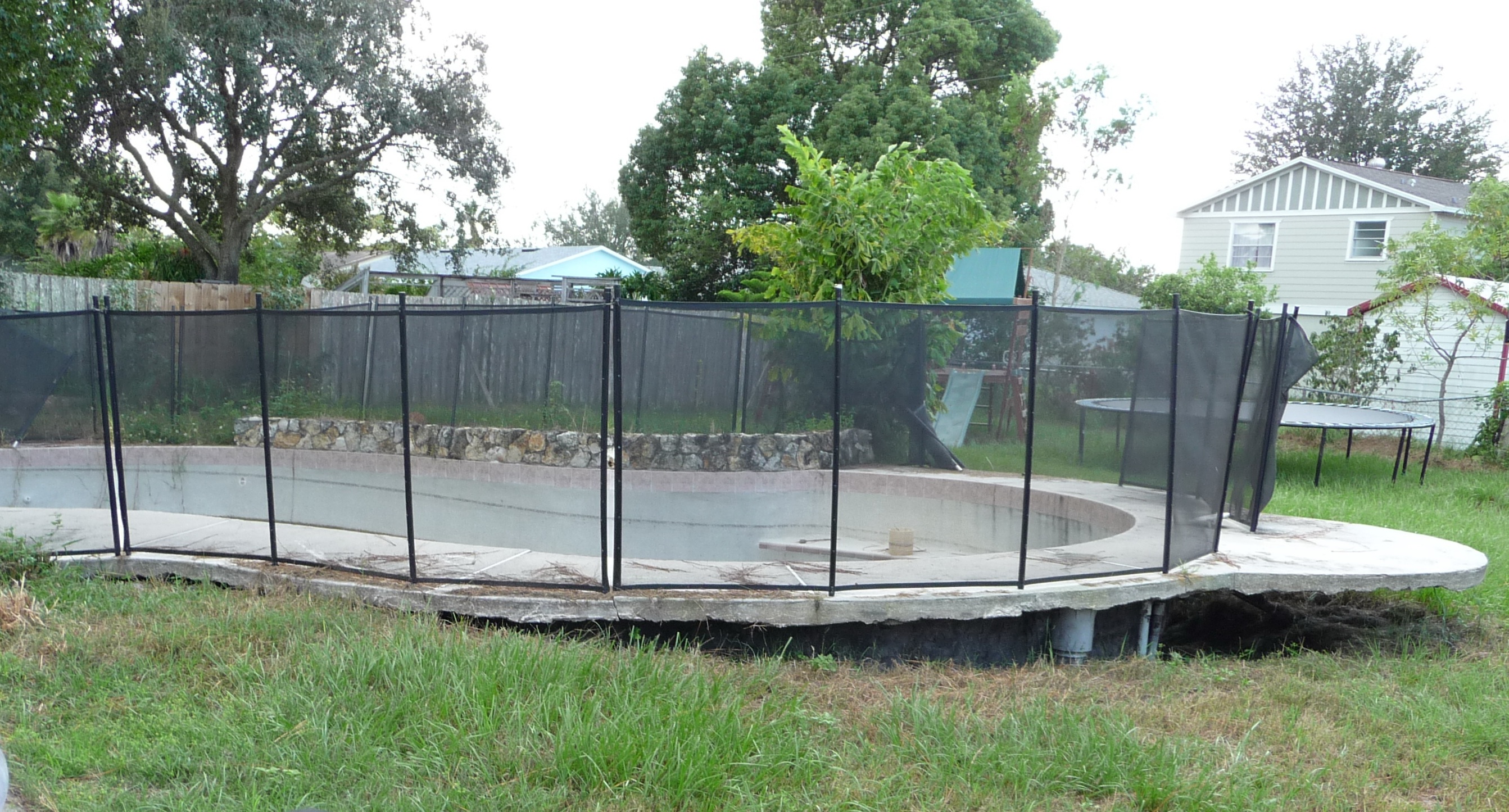
The following photograph shows an in-ground concrete swimming pool failure due to hydrostatic forces. The deep end of the pool has lifted significantly out of the ground:
Hydrostatic forces have the potential to cause significant damage to an in-ground pool or spa. In saturated soils, in-ground shells are susceptible to this type of failure after they are fully or partially emptied. This is because of the potential for hydrostatic forces to overcome the weight of the buried pool or spa and other restraining forces.
When an object is submerged in a liquid, the upward force on the object is equal to the weight of the liquid displaced. This force is opposed by the weight of the object, including the weight of whatever the object contains. The same principle applies to a pool or spa shell buried in saturated soil. Under normal conditions, the shell is filled with water. The weight of the water and shell along with other restraining effects counteract the buoyancy effect of the saturated soil, and the shell remains in place. However, if the shell is empty when the surrounding soil is saturated, the hydrostatic uplift force can force the shell upward, even out of the ground. This usually results in cracks and other damage to the adjacent components, including decks, supply and drain lines, etc. Failures of this type are often more severe at the deep end of the shell, for obvious reasons.
Fiberglass shells are susceptible to this type of failure due to their relative low weight but even heavier concrete shells have the potential to fail in this manner. Hydrostatic forces, together with soil weight, may also cause the sides of a fiberglass or vinyl lined panel pool shell to deflect inward when the pool is emptied. When the pool is full, water in the pool opposes the lateral forces of the soil and water surrounding the pool shell. The opposing hydrostatic force is not present when the pool is emptied.
Hydrostatic valves and drain pipes are sometimes used to help prevent a hydrostatic failure. A hydrostatic relief or check valve is often placed at or in the main pool drain. The purpose of this valve is to equalize pressure between the water beneath the pool and water at the bottom of the pool. Should the water pressure beneath the pool substantially surpass the water pressure at the bottom of the pool, the valve is supposed to open, allowing water beneath the pool to flow into the pool bottom. A murky or dark cloud near the pool drain may indicate recent relief valve activity. Some installers report a high potential for problems with this type of valve. Reported problems include the valve being stuck open and draining the pool or failure of the valve to open when needed to relieve high pressure beneath the pool shell.
Alternatively, a line may be provided from an area of aggregate beneath the pool shell during the original pool construction. When the pool is to be emptied, this line is used to draw water out of the area beneath the pool, thus reducing pressure. If an in-ground pool is to be emptied, a professional should be hired to assist due to the risk of hydrostatic failure. This is particularly true during rainy seasons or when dealing with an older fiberglass shell.
The following photograph shows an in-ground concrete swimming pool failure due to hydrostatic forces. The deep end of the pool has lifted significantly out of the ground: