Roof and Floor Decking / Sheathing
2011-10-19
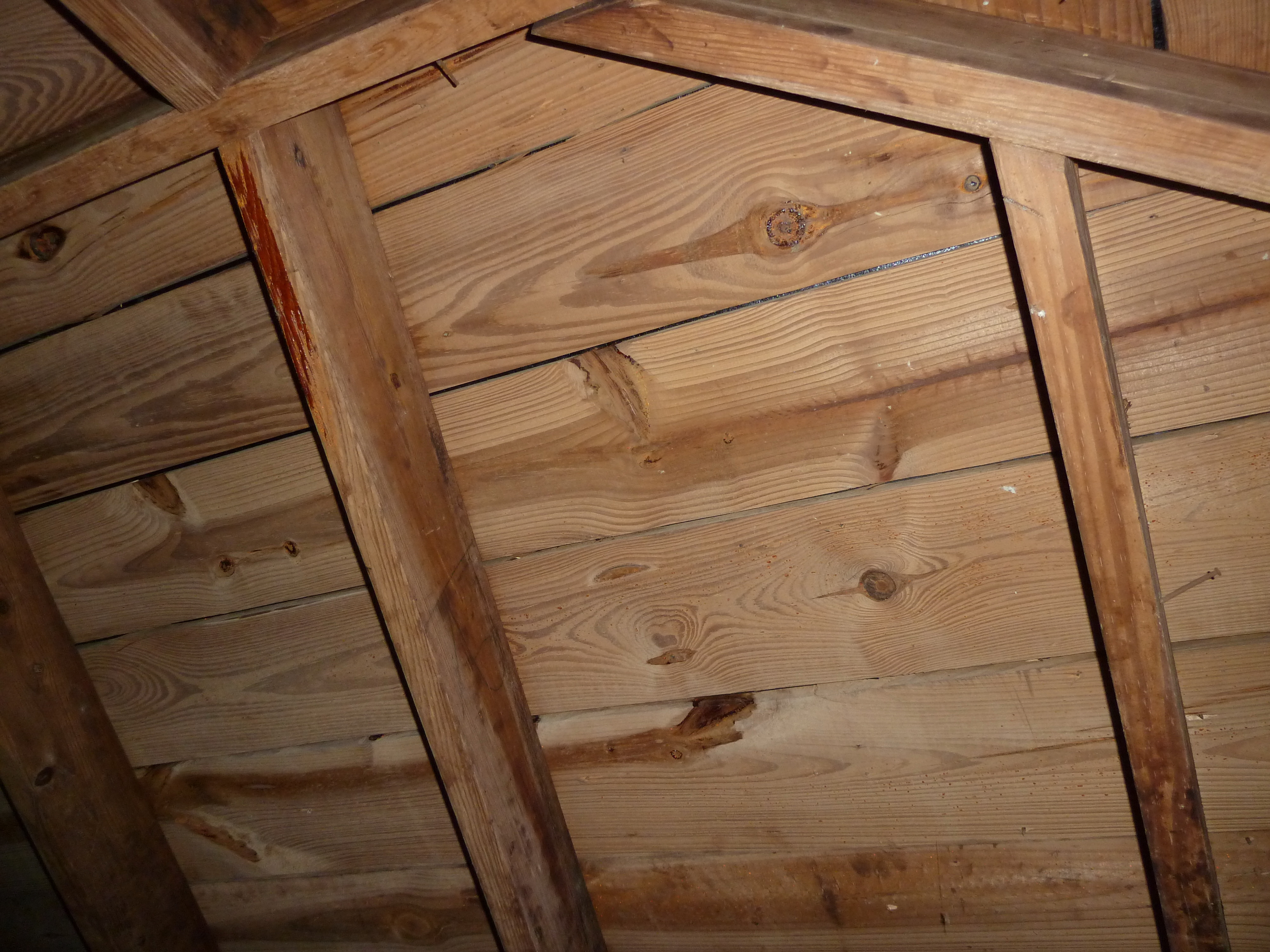 Roof and floor decking cover the roof/floor structural members (trusses, joists and rafters), and may act as a structural diaphragm. Roof sheathing accepts the roofing (membrane, shingles, tiles, metal), and floor decking accepts the finish flooring (carpet, tile, vinyl).
The terms 'decking' and 'sheathing' are often used interchangeably. However, 'sheathing' generally refers to plywood or orientated strand board (OSB), common materials used for roof, floor, and wall sheathing. Alternatively, floor decks often use 2x sawn lumber planks, and roof decks may use 1x sawn lumber.
PLYWOOD:
Plywood is composed of plies, or layers, of wood sometimes referred to as veneers. The veneers are shaved from a log in a continuous sheet. The individual plies are placed cross grain to each other and glued together. The perpendicular wood grains increase strength and dimensional stability. The quality of the wood and the type of glue used in the manufacturing process vary with the grade and intended use of the plywood.
Plywood is commonly available in 4x8 foot panels with thicknesses varying between 1/4 to 1 inch. A 1/2 or 5/8 inch thickness is often used for roof sheathing, and a 3/4 or 1 inch thickness is common for floor sheathing. The spacing of the support joists or trusses, the expected loads, and local building code determine the thickness required. The thickness of plywood is actually 1/32 inch less than the designated fraction of 1/2 inch, 3/4 inch, etc. For example, 5/8 inch plywood is 19/32 inch in actual thickness.
Pressure treated plywood is used in locations where moisture or other adverse conditions are present. Modern pressure treated wood is commonly treated with a copper solution, often alkaline copper quaternary (ACQ). The copper reacts with steel, accelerating the corrosion of unprotected fasteners. For this reason, nails and other fasteners used in pressure treated wood should be galvanized or stainless steel.
Pressure treated wood prior to 2004 often used chromated copper arsenate (CCA) which contains arsenic. Pressure treated plywood is usually heavy and wet with solution when purchased. Therefore, it shrinks and is more prone to warping as it dries. Sufficient time should be allowed for its moisture content to stabilize with its surrounding environment prior to coating or applying a brittle finish such as stucco or tile.
Plywood is prone to layer delamination when exposed to moisture, although this delamination tends to return to its original state when dried.
OSB:
OSB is an engineered wood product made of wood strands (chips) orientated, pressed, and adhered together with heat. Similar to plywood, it is made up of individual layers. Because it is manufactured from smaller "pieces" of wood, it does not require the use of mature trees. The structural characteristics of OSB are similar to plywood, and like plywood it is widely used throughout the United States as roof, floor and wall sheathing.
Unlike plywood, which may contain voids due to missing knots or other natural deformities in the wood veneers, OSB is solid throughout its cross section, and is typically more uniform and less expensive than plywood. However, it is heavier than plywood (~15% to 20%), and more prone to permanent moisture swelling due to the release of compaction stresses. This is particularly true at the panel edges. OSB may be less resistant to impact, and is not as stiff as plywood. Thus, it is more prone to immediate and long-term deflection (creep). Of note is that the National Roofing Contractors Association states the following with regard to tile roof systems on its website:
Roof and floor decking cover the roof/floor structural members (trusses, joists and rafters), and may act as a structural diaphragm. Roof sheathing accepts the roofing (membrane, shingles, tiles, metal), and floor decking accepts the finish flooring (carpet, tile, vinyl).
The terms 'decking' and 'sheathing' are often used interchangeably. However, 'sheathing' generally refers to plywood or orientated strand board (OSB), common materials used for roof, floor, and wall sheathing. Alternatively, floor decks often use 2x sawn lumber planks, and roof decks may use 1x sawn lumber.
PLYWOOD:
Plywood is composed of plies, or layers, of wood sometimes referred to as veneers. The veneers are shaved from a log in a continuous sheet. The individual plies are placed cross grain to each other and glued together. The perpendicular wood grains increase strength and dimensional stability. The quality of the wood and the type of glue used in the manufacturing process vary with the grade and intended use of the plywood.
Plywood is commonly available in 4x8 foot panels with thicknesses varying between 1/4 to 1 inch. A 1/2 or 5/8 inch thickness is often used for roof sheathing, and a 3/4 or 1 inch thickness is common for floor sheathing. The spacing of the support joists or trusses, the expected loads, and local building code determine the thickness required. The thickness of plywood is actually 1/32 inch less than the designated fraction of 1/2 inch, 3/4 inch, etc. For example, 5/8 inch plywood is 19/32 inch in actual thickness.
Pressure treated plywood is used in locations where moisture or other adverse conditions are present. Modern pressure treated wood is commonly treated with a copper solution, often alkaline copper quaternary (ACQ). The copper reacts with steel, accelerating the corrosion of unprotected fasteners. For this reason, nails and other fasteners used in pressure treated wood should be galvanized or stainless steel.
Pressure treated wood prior to 2004 often used chromated copper arsenate (CCA) which contains arsenic. Pressure treated plywood is usually heavy and wet with solution when purchased. Therefore, it shrinks and is more prone to warping as it dries. Sufficient time should be allowed for its moisture content to stabilize with its surrounding environment prior to coating or applying a brittle finish such as stucco or tile.
Plywood is prone to layer delamination when exposed to moisture, although this delamination tends to return to its original state when dried.
OSB:
OSB is an engineered wood product made of wood strands (chips) orientated, pressed, and adhered together with heat. Similar to plywood, it is made up of individual layers. Because it is manufactured from smaller "pieces" of wood, it does not require the use of mature trees. The structural characteristics of OSB are similar to plywood, and like plywood it is widely used throughout the United States as roof, floor and wall sheathing.
Unlike plywood, which may contain voids due to missing knots or other natural deformities in the wood veneers, OSB is solid throughout its cross section, and is typically more uniform and less expensive than plywood. However, it is heavier than plywood (~15% to 20%), and more prone to permanent moisture swelling due to the release of compaction stresses. This is particularly true at the panel edges. OSB may be less resistant to impact, and is not as stiff as plywood. Thus, it is more prone to immediate and long-term deflection (creep). Of note is that the National Roofing Contractors Association states the following with regard to tile roof systems on its website:
"Caution should be exercised when roof decks are constructed out of the following materials:
- Oriented strand board (OSB): NRCA is concerned with potential fastener-holding problems and dimensional stability because of the effects of moisture where OSB and other nonveneer products are used as roof decking..."