Cracks and Spalling in Structural Concrete
2011-11-24
For the purpose of this discussion, 'structural concrete' refers to concrete members that are reinforced with steel. Plain (unreinforced) concrete is strong in compression, but its tensile strength is typically only 10%-15% of its compressive strength. Steel, which is strong in tension, is placed within a concrete member at locations that are expected to experience tensile forces. Reinforcing steel is also placed within structural concrete for shear, torsion, and other considerations.
 Cracks in structural concrete members occur for several reasons. Shrinkage and restrained thermal movement is a common cause of concrete cracks. This type of cracking affecting a slab on grade is discussed here.
Structural concrete members may also crack and deflect due to overloading. While cracks due to overloading may not be as common, they obviously represent a very serious structural condition that requires immediate attention.
A third cause of cracks in structural concrete accompanies the corrosion of concrete reinforcement steel. This corrosion also leads to spalling (pieces of concrete separating or falling off). Cracks and spalling due to corrosion is the focus of this discussion.
Portland Cement is mixed with water and aggregates to make concrete. When mixed with water, the cement goes through a chemical process called hydration, and this process yields calcium silicate and calcium hydroxide. The calcium hydroxide dissolves in the concrete pore water and provides an alkaline environment of 12-13 pH around the reinforcing steel. In this environment a protective film of gamma ferric oxide is formed at the steel surface. This oxide film causes the surface of the steel to passivate, retarding oxidation and preventing corrosion. However, this film may be destroyed by carbonation or chloride penetration.
In the case of carbonation, atmosphere carbon dioxide reacts with the calcium hydroxide in the concrete and forms a carbonate. The result is a drop in pH to 8-8.5. Since the protective film on the steel can only exist at pH levels above 10.5, the reinforcement steel loses protection. The penetration of carbon dioxide can be accelerated by the presence of micro-cracks due to internal and external stresses, shrinkage cracks, etc. The loss of the protective film where the cracks intersect steel combined with the introduction of moisture initiate corrosion.
In the coastal areas of Florida, chlorides are often introduced into the concrete through salt water and sea spray. In past construction, calcium chloride accelerators were sometimes added to concrete during mixing. There are also cases where beach sand or salt-contaminated water were used in making concrete. These practices directly introduced chlorides into the concrete during original construction.
Negatively charged chloride ions break down the protective film around the steel, producing an electrochemical reaction. During this reaction, portions of the steel become anodes (sites where negatively charged electrons are produced) and oxidation occurs. A separate cathodic metal is not required because isolated bars rust due to different areas of the bar developing active sites with different electrochemical potentials. These anode-cathode pairs are created due to different concentrations of oxygen or electrolyte in contact with metal, different impurity levels, and different amounts of residual strains.
The electric flow leads to rust. As the steel corrodes, it expands in volume. This expansion can be many times the initial steel volume and cracks the concrete. As the concrete cracks, the steel corrosion process increases due to additional exposure. Eventually, the concrete spalls and the steel loses bond with the concrete. Unbonded steel cannot properly perform its function. As the steel corrodes, there is less capable steel left to carry forces within the concrete member. If the corrosion process is not halted and properly repaired, the concrete member may eventually collapse, even under its own weight.
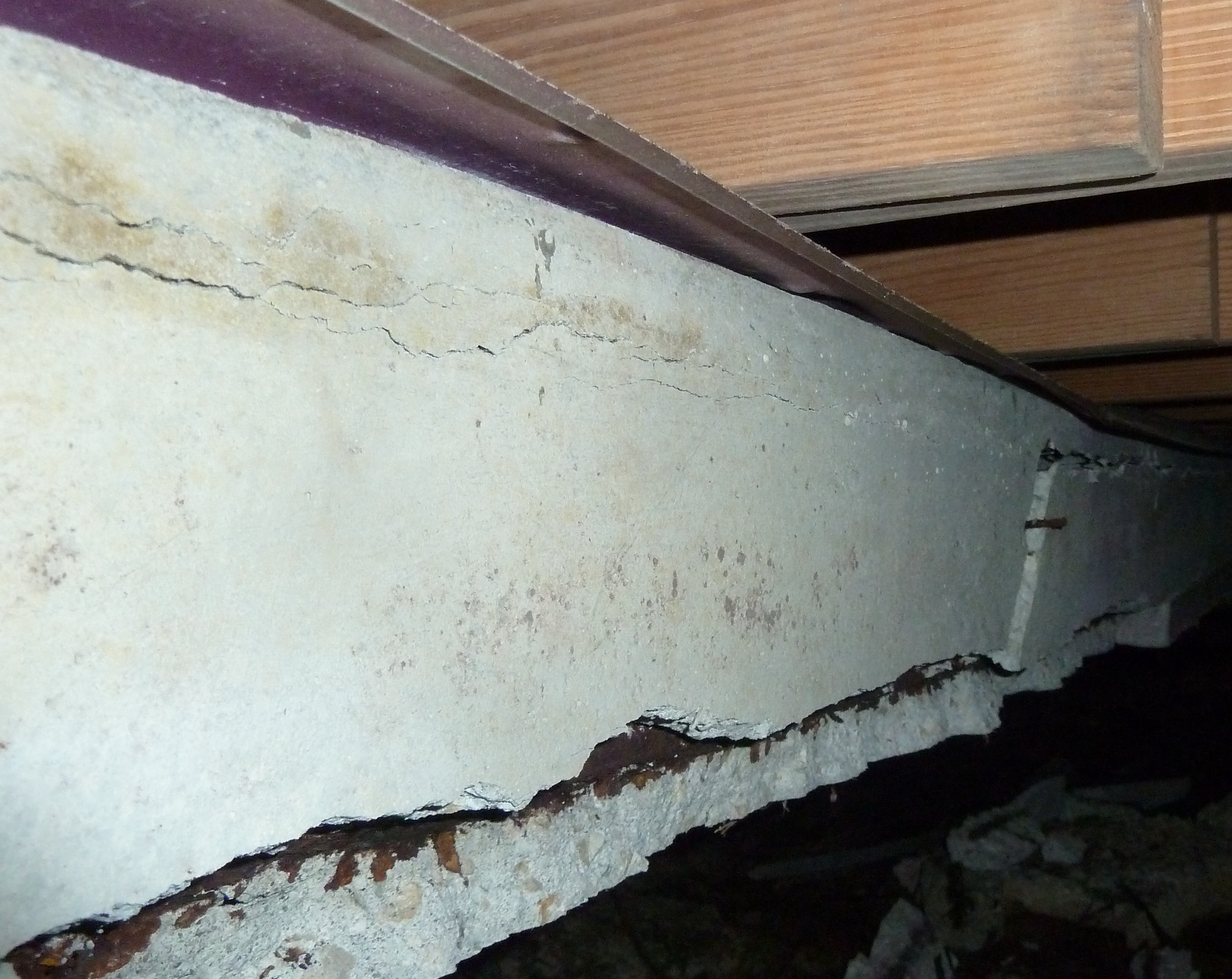
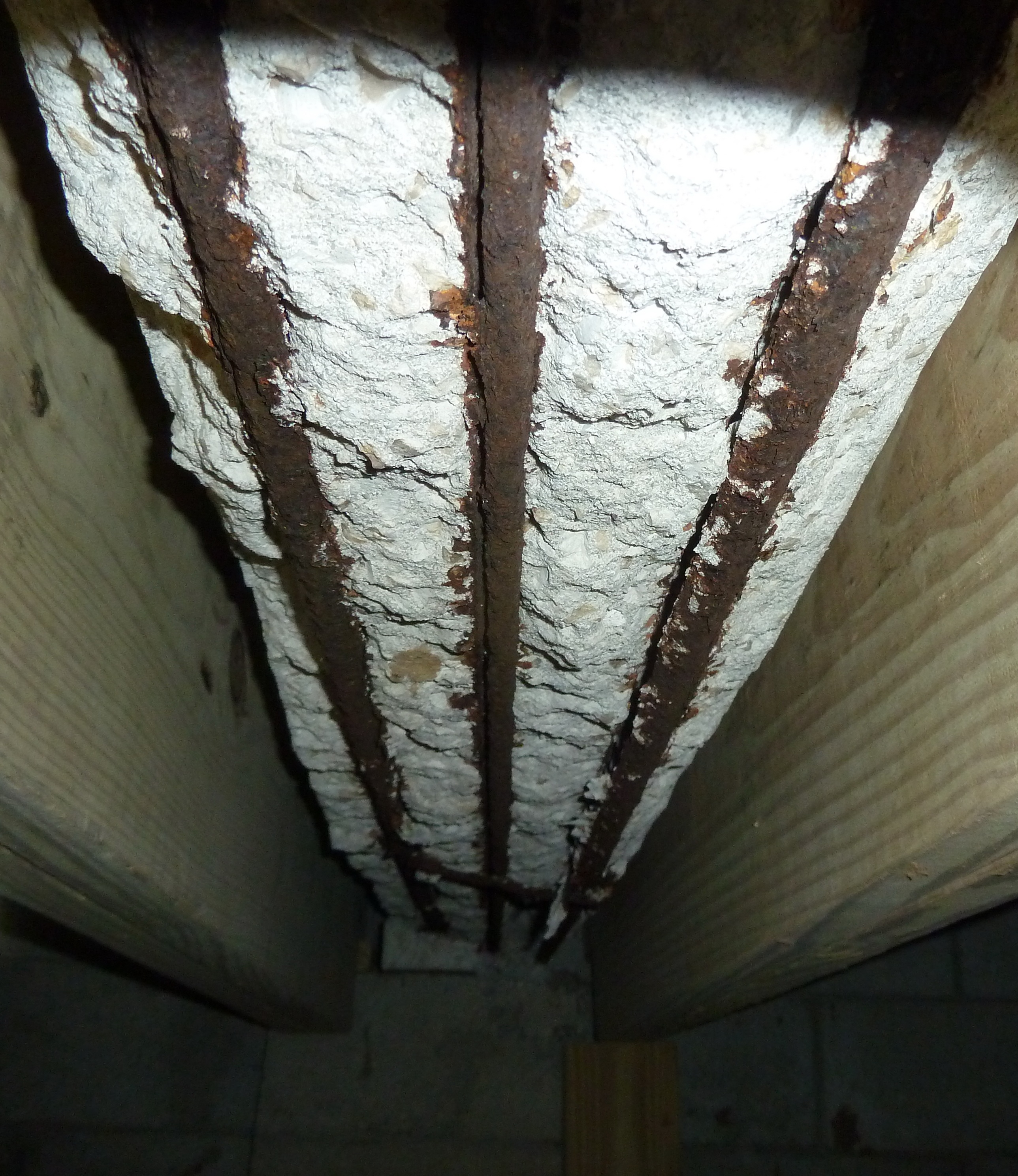
The following is a photograph of a concrete beam supporting wood floor joists. The bottom steel of the beam is severely corroded. Some of the concrete adjacent to the affected bars has spalled off and can be seen lying on the ground beneath the beam. Horizontal cracks are also visible near the top of the beam, which likely indicates ongoing corrosion at the top steel.
Cracks in structural concrete members occur for several reasons. Shrinkage and restrained thermal movement is a common cause of concrete cracks. This type of cracking affecting a slab on grade is discussed here.
Structural concrete members may also crack and deflect due to overloading. While cracks due to overloading may not be as common, they obviously represent a very serious structural condition that requires immediate attention.
A third cause of cracks in structural concrete accompanies the corrosion of concrete reinforcement steel. This corrosion also leads to spalling (pieces of concrete separating or falling off). Cracks and spalling due to corrosion is the focus of this discussion.
Portland Cement is mixed with water and aggregates to make concrete. When mixed with water, the cement goes through a chemical process called hydration, and this process yields calcium silicate and calcium hydroxide. The calcium hydroxide dissolves in the concrete pore water and provides an alkaline environment of 12-13 pH around the reinforcing steel. In this environment a protective film of gamma ferric oxide is formed at the steel surface. This oxide film causes the surface of the steel to passivate, retarding oxidation and preventing corrosion. However, this film may be destroyed by carbonation or chloride penetration.
In the case of carbonation, atmosphere carbon dioxide reacts with the calcium hydroxide in the concrete and forms a carbonate. The result is a drop in pH to 8-8.5. Since the protective film on the steel can only exist at pH levels above 10.5, the reinforcement steel loses protection. The penetration of carbon dioxide can be accelerated by the presence of micro-cracks due to internal and external stresses, shrinkage cracks, etc. The loss of the protective film where the cracks intersect steel combined with the introduction of moisture initiate corrosion.
In the coastal areas of Florida, chlorides are often introduced into the concrete through salt water and sea spray. In past construction, calcium chloride accelerators were sometimes added to concrete during mixing. There are also cases where beach sand or salt-contaminated water were used in making concrete. These practices directly introduced chlorides into the concrete during original construction.
Negatively charged chloride ions break down the protective film around the steel, producing an electrochemical reaction. During this reaction, portions of the steel become anodes (sites where negatively charged electrons are produced) and oxidation occurs. A separate cathodic metal is not required because isolated bars rust due to different areas of the bar developing active sites with different electrochemical potentials. These anode-cathode pairs are created due to different concentrations of oxygen or electrolyte in contact with metal, different impurity levels, and different amounts of residual strains.
The electric flow leads to rust. As the steel corrodes, it expands in volume. This expansion can be many times the initial steel volume and cracks the concrete. As the concrete cracks, the steel corrosion process increases due to additional exposure. Eventually, the concrete spalls and the steel loses bond with the concrete. Unbonded steel cannot properly perform its function. As the steel corrodes, there is less capable steel left to carry forces within the concrete member. If the corrosion process is not halted and properly repaired, the concrete member may eventually collapse, even under its own weight.
The following is a photograph of a concrete beam supporting wood floor joists. The bottom steel of the beam is severely corroded. Some of the concrete adjacent to the affected bars has spalled off and can be seen lying on the ground beneath the beam. Horizontal cracks are also visible near the top of the beam, which likely indicates ongoing corrosion at the top steel.
 Cracks in structural concrete members occur for several reasons. Shrinkage and restrained thermal movement is a common cause of concrete cracks. This type of cracking affecting a slab on grade is discussed here.
Structural concrete members may also crack and deflect due to overloading. While cracks due to overloading may not be as common, they obviously represent a very serious structural condition that requires immediate attention.
A third cause of cracks in structural concrete accompanies the corrosion of concrete reinforcement steel. This corrosion also leads to spalling (pieces of concrete separating or falling off). Cracks and spalling due to corrosion is the focus of this discussion.
Portland Cement is mixed with water and aggregates to make concrete. When mixed with water, the cement goes through a chemical process called hydration, and this process yields calcium silicate and calcium hydroxide. The calcium hydroxide dissolves in the concrete pore water and provides an alkaline environment of 12-13 pH around the reinforcing steel. In this environment a protective film of gamma ferric oxide is formed at the steel surface. This oxide film causes the surface of the steel to passivate, retarding oxidation and preventing corrosion. However, this film may be destroyed by carbonation or chloride penetration.
In the case of carbonation, atmosphere carbon dioxide reacts with the calcium hydroxide in the concrete and forms a carbonate. The result is a drop in pH to 8-8.5. Since the protective film on the steel can only exist at pH levels above 10.5, the reinforcement steel loses protection. The penetration of carbon dioxide can be accelerated by the presence of micro-cracks due to internal and external stresses, shrinkage cracks, etc. The loss of the protective film where the cracks intersect steel combined with the introduction of moisture initiate corrosion.
In the coastal areas of Florida, chlorides are often introduced into the concrete through salt water and sea spray. In past construction, calcium chloride accelerators were sometimes added to concrete during mixing. There are also cases where beach sand or salt-contaminated water were used in making concrete. These practices directly introduced chlorides into the concrete during original construction.
Negatively charged chloride ions break down the protective film around the steel, producing an electrochemical reaction. During this reaction, portions of the steel become anodes (sites where negatively charged electrons are produced) and oxidation occurs. A separate cathodic metal is not required because isolated bars rust due to different areas of the bar developing active sites with different electrochemical potentials. These anode-cathode pairs are created due to different concentrations of oxygen or electrolyte in contact with metal, different impurity levels, and different amounts of residual strains.
The electric flow leads to rust. As the steel corrodes, it expands in volume. This expansion can be many times the initial steel volume and cracks the concrete. As the concrete cracks, the steel corrosion process increases due to additional exposure. Eventually, the concrete spalls and the steel loses bond with the concrete. Unbonded steel cannot properly perform its function. As the steel corrodes, there is less capable steel left to carry forces within the concrete member. If the corrosion process is not halted and properly repaired, the concrete member may eventually collapse, even under its own weight.
The following is a photograph of a concrete beam supporting wood floor joists. The bottom steel of the beam is severely corroded. Some of the concrete adjacent to the affected bars has spalled off and can be seen lying on the ground beneath the beam. Horizontal cracks are also visible near the top of the beam, which likely indicates ongoing corrosion at the top steel.
Cracks in structural concrete members occur for several reasons. Shrinkage and restrained thermal movement is a common cause of concrete cracks. This type of cracking affecting a slab on grade is discussed here.
Structural concrete members may also crack and deflect due to overloading. While cracks due to overloading may not be as common, they obviously represent a very serious structural condition that requires immediate attention.
A third cause of cracks in structural concrete accompanies the corrosion of concrete reinforcement steel. This corrosion also leads to spalling (pieces of concrete separating or falling off). Cracks and spalling due to corrosion is the focus of this discussion.
Portland Cement is mixed with water and aggregates to make concrete. When mixed with water, the cement goes through a chemical process called hydration, and this process yields calcium silicate and calcium hydroxide. The calcium hydroxide dissolves in the concrete pore water and provides an alkaline environment of 12-13 pH around the reinforcing steel. In this environment a protective film of gamma ferric oxide is formed at the steel surface. This oxide film causes the surface of the steel to passivate, retarding oxidation and preventing corrosion. However, this film may be destroyed by carbonation or chloride penetration.
In the case of carbonation, atmosphere carbon dioxide reacts with the calcium hydroxide in the concrete and forms a carbonate. The result is a drop in pH to 8-8.5. Since the protective film on the steel can only exist at pH levels above 10.5, the reinforcement steel loses protection. The penetration of carbon dioxide can be accelerated by the presence of micro-cracks due to internal and external stresses, shrinkage cracks, etc. The loss of the protective film where the cracks intersect steel combined with the introduction of moisture initiate corrosion.
In the coastal areas of Florida, chlorides are often introduced into the concrete through salt water and sea spray. In past construction, calcium chloride accelerators were sometimes added to concrete during mixing. There are also cases where beach sand or salt-contaminated water were used in making concrete. These practices directly introduced chlorides into the concrete during original construction.
Negatively charged chloride ions break down the protective film around the steel, producing an electrochemical reaction. During this reaction, portions of the steel become anodes (sites where negatively charged electrons are produced) and oxidation occurs. A separate cathodic metal is not required because isolated bars rust due to different areas of the bar developing active sites with different electrochemical potentials. These anode-cathode pairs are created due to different concentrations of oxygen or electrolyte in contact with metal, different impurity levels, and different amounts of residual strains.
The electric flow leads to rust. As the steel corrodes, it expands in volume. This expansion can be many times the initial steel volume and cracks the concrete. As the concrete cracks, the steel corrosion process increases due to additional exposure. Eventually, the concrete spalls and the steel loses bond with the concrete. Unbonded steel cannot properly perform its function. As the steel corrodes, there is less capable steel left to carry forces within the concrete member. If the corrosion process is not halted and properly repaired, the concrete member may eventually collapse, even under its own weight.
The following is a photograph of a concrete beam supporting wood floor joists. The bottom steel of the beam is severely corroded. Some of the concrete adjacent to the affected bars has spalled off and can be seen lying on the ground beneath the beam. Horizontal cracks are also visible near the top of the beam, which likely indicates ongoing corrosion at the top steel.