Structural Help

Shrinkage Cracks in Concrete Slabs

2011-10-26

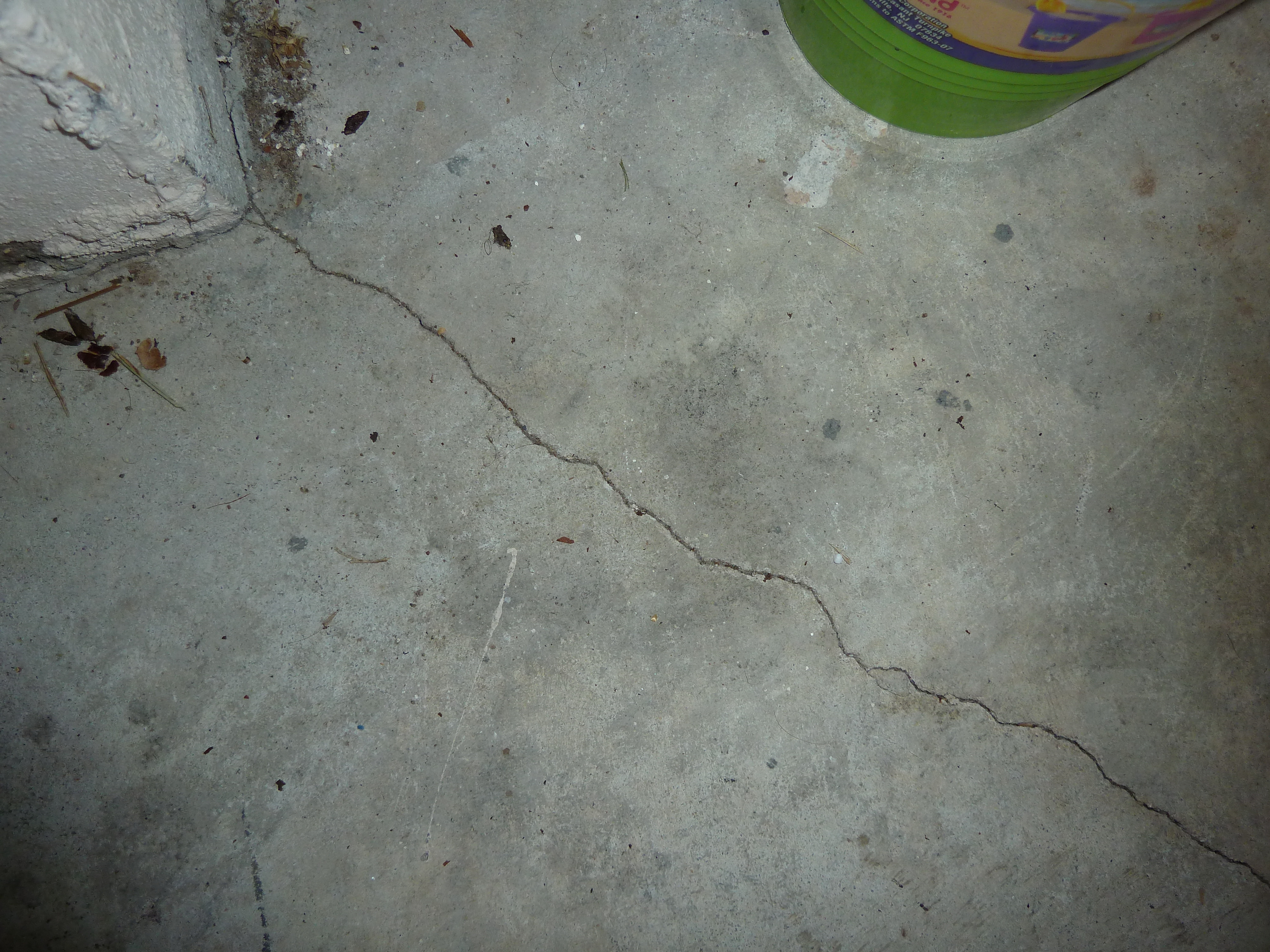
It is concrete's nature to crack.  This fact arises from at least two primary characteristics of concrete. The first of these is concrete’s tendency to shrink.  The amount of concrete shrinkage is a function of numerous factors including the gradation and quality of aggregates, water and paste content, admixtures and cement used in the mix, and ambient humidity and temperature conditions.  A second characteristic that contributes to concrete cracking is that while concrete is strong in compression, it is weak in tension.  These characteristics combined with minor settlement and thermal effects are leading contributors to many cracks which occur in concrete slabs on grade. Cracking of concrete slabs on grade is often caused by movement restraint brought about by concrete shrinkage and thermal movements.  Different areas of a slab are restrained with respect to one another by base friction and structural members such as footings or columns.  As the concrete shrinks, the restraints induce tensile forces within the slab which are relieved when the slab cracks. Poor construction materials or methods may also contribute to concrete shrinkage and cracking. These include: For workability during initial placement, concrete is mixed with more water than needed for hydration, or hardening. This "water of convenience" evaporates or otherwise leaves the concrete, causing drying shrinkage.  Some amount of drying shrinkage is common to all new concrete, and can generally be reduced by reducing the amount of water used in the concrete mix. Steel reinforcement or welded wire fabric (WWF) is often used in concrete slabs on grade.  This reinforcement does not prevent cracks, but is intended to limit their width.  Typically, WWF should be placed in the middle or upper middle of the slab.  This is often not achieved in practice due to a number of reasons, one of which is the curvature of rolled mesh resulting in waves which improperly vary the depth of mesh within the slab.  Even if the mesh is straight and initially placed properly, foot traffic and the concrete itself have the potential to push the mesh toward the bottom of the slab where it cannot properly serve its purpose. The Portland Cement Association recommends that contraction joints be provided at intervals of 30 times the slab thickness.  For example, a four inch thick concrete slab on grade would require contraction joints spaced at 120 inches, or 10 feet intervals. Contraction joints weaken the slab surface at linear joints.  This forces cracks to occur along the linear joint, rather than in a more random and unsightly manner. Proper curing is an important requirement with new concrete.  The hydration process is most rapid during the first several days and weeks after concrete placement, but may go on for decades.  During the first several days, it is important that water is available to the cement for the hydration process.  It is also important to maintain a uniform and appropriate curing temperature.  Proper curing assures that new concrete is provided enough water and maintained at an appropriate temperature for proper initial hydration.  This is accomplished using sprayed curing agents, plastic sheets, wet mats or sprinkling. Plastic shrinkage cracking is defined by the American Concrete Institute as "cracking that occurs in the surface of fresh concrete soon after it is placed and while it is still plastic."  This type of cracking occurs due to improper curing when evaporation overcomes the rate of bleed water rising to the surface of the new concrete slab.  The surface dries out, shrinks, and cracks due to movement restraint from the concrete below the surface. Plastic shrinkage cracks may be wide, but are usually shallow and do not affect the entire depth of slab.  They are often parallel with each other, and spaced at approximately one to three feet intervals. In summary, concrete cracking cannot be totally prevented.  However, with proper materials and construction techniques, cracking can be controlled and limited. The following photograph shows a crack in a concrete slab on grade due to shrinkage and thermal movement.  Note the worn edges and no visible or measurable displacement across the crack:

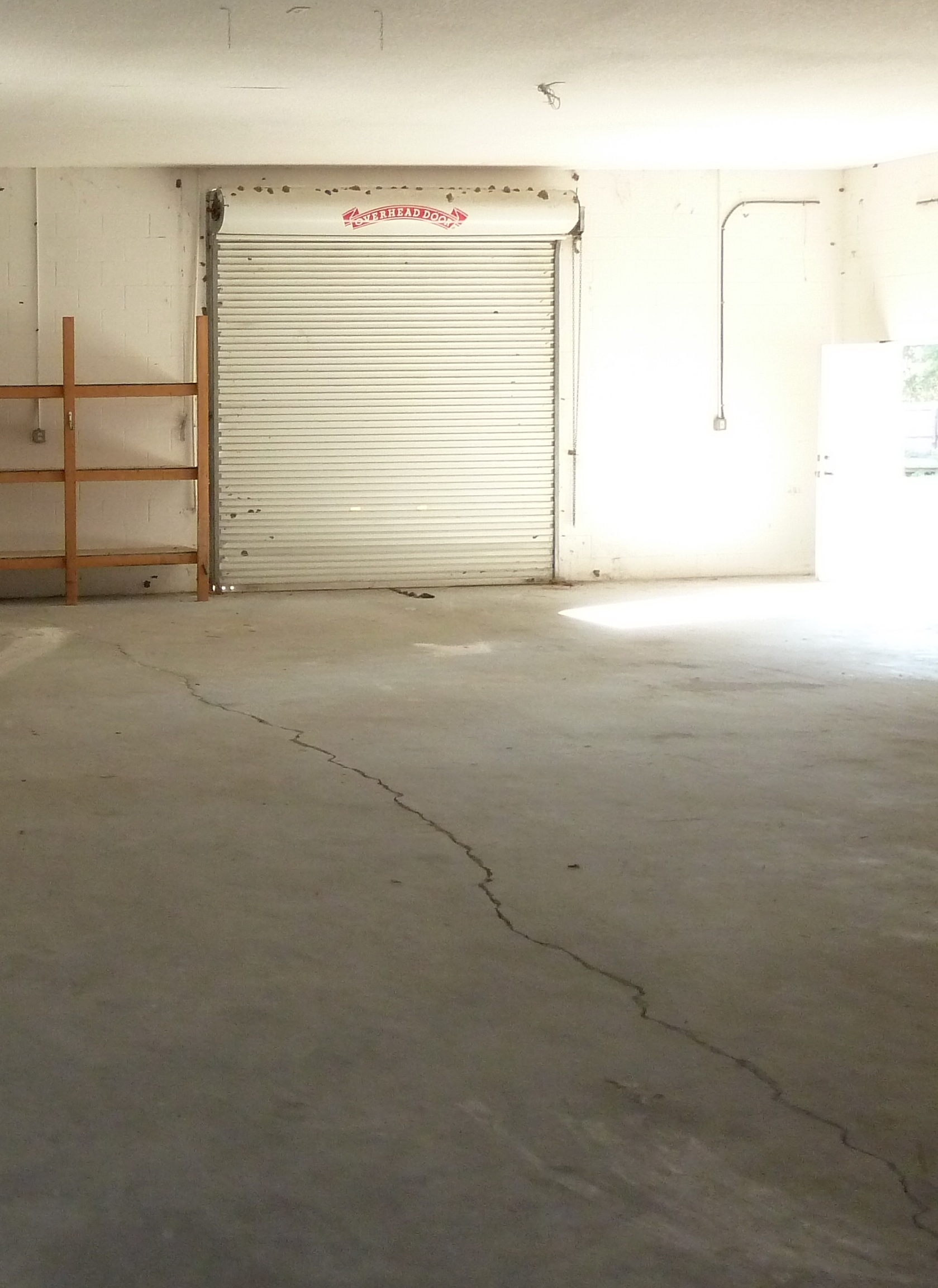
The next photograph shows a relatively large shrinkage crack which effectively split a large garage floor slab in half.  The slab had no contraction joints, and cracked down the approximate middle.  There is no visible or measurable displacement across the crack, and no indications of structural distress at the walls or ceilings in the vicinity of the crack:

  ADDITIONAL RESOURCES: ACI 224R - Control of Cracking in Concrete Structures Portland Cement Association - Concrete Slab Surface Defects: Causes, Prevention, Repair