Load Bearing Walls (Interior and Exterior)
2011-09-20
Walls obviously separate one area or space from another and exterior walls also protect the occupants of a building from the elements. The walls of a typical home are constructed using several different materials and methods and may be either load bearing or non load bearing. The construction of a load bearing wall is not necessarily different than that of a non load bearing wall, particularly with regard to framed interior walls. The determination is made by what the wall supports.
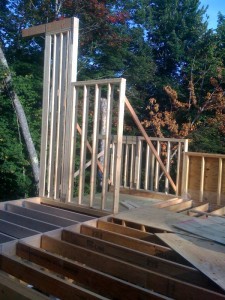 Load bearing walls support and transfer significant loads. These loads are often transferred directly to the foundations of the home, or a load bearing wall may be supported by a floor structure or beam. If a wall supports a roof, floor, or some other permanent structure, it is considered load bearing. Virtually all exterior perimeter walls of a typical home are load bearing, as they usually support a roof and enclose the interior of the home. If an interior wall simply separates two interior rooms and supports no floor, roof, diaphragm, or other load, it is non load bearing.
Due to interior finishes and the various structure possibilities, the distinction between load bearing and non load bearing is not always obvious. The determination should be made by a qualified professional via a plan review and/or inspection. The removal, modification or damage to a load bearing wall has the potential for serious, even dangerous consequences. The removal or modification of even non-load bearing walls has the potential for effects on electrical, plumbing, or other utility lines.
Framed walls are found at both the interior and exterior (perimeter) walls of many homes. Concrete masonry unit (CMU) is normally found at exterior walls but may also exist at the interior, particularly when an older home has had past additions. Solid reinforced concrete is another method of wall construction and more commonly found at construction detached from the home, such as fences, retaining walls, privacy walls, or seawalls.
Loads vary with the type and location of the wall and supported elements. Loads are commonly induced by gravity, wind, and earth. Under most conditions, gravity loads from the weight of the roof and floor structures and their supported elements are carried by girders, beams and/or walls. Under high wind conditions, the weight of the supported structure may be surpassed by the force from uplift pressure on the roof. In this case, the load on the walls supporting the roof is reversed, and the supporting walls (or columns) must resist an uplift load together with their foundations. Wind also causes lateral (horizontal) pressure against the exterior walls of a home. Earth pressure must be restrained if a wall is partially or completely buried on one side more than the other. Some walls are subjected to shear forces which must be restrained to prevent lateral movement or overturning.
As with any structural component or system, problems may arise from improper construction, damage, or deterioration of a load bearing wall. Some common problems with walls and their causes are discussed in Common Problems and Diagnosis.
Load bearing walls support and transfer significant loads. These loads are often transferred directly to the foundations of the home, or a load bearing wall may be supported by a floor structure or beam. If a wall supports a roof, floor, or some other permanent structure, it is considered load bearing. Virtually all exterior perimeter walls of a typical home are load bearing, as they usually support a roof and enclose the interior of the home. If an interior wall simply separates two interior rooms and supports no floor, roof, diaphragm, or other load, it is non load bearing.
Due to interior finishes and the various structure possibilities, the distinction between load bearing and non load bearing is not always obvious. The determination should be made by a qualified professional via a plan review and/or inspection. The removal, modification or damage to a load bearing wall has the potential for serious, even dangerous consequences. The removal or modification of even non-load bearing walls has the potential for effects on electrical, plumbing, or other utility lines.
Framed walls are found at both the interior and exterior (perimeter) walls of many homes. Concrete masonry unit (CMU) is normally found at exterior walls but may also exist at the interior, particularly when an older home has had past additions. Solid reinforced concrete is another method of wall construction and more commonly found at construction detached from the home, such as fences, retaining walls, privacy walls, or seawalls.
Loads vary with the type and location of the wall and supported elements. Loads are commonly induced by gravity, wind, and earth. Under most conditions, gravity loads from the weight of the roof and floor structures and their supported elements are carried by girders, beams and/or walls. Under high wind conditions, the weight of the supported structure may be surpassed by the force from uplift pressure on the roof. In this case, the load on the walls supporting the roof is reversed, and the supporting walls (or columns) must resist an uplift load together with their foundations. Wind also causes lateral (horizontal) pressure against the exterior walls of a home. Earth pressure must be restrained if a wall is partially or completely buried on one side more than the other. Some walls are subjected to shear forces which must be restrained to prevent lateral movement or overturning.
As with any structural component or system, problems may arise from improper construction, damage, or deterioration of a load bearing wall. Some common problems with walls and their causes are discussed in Common Problems and Diagnosis.
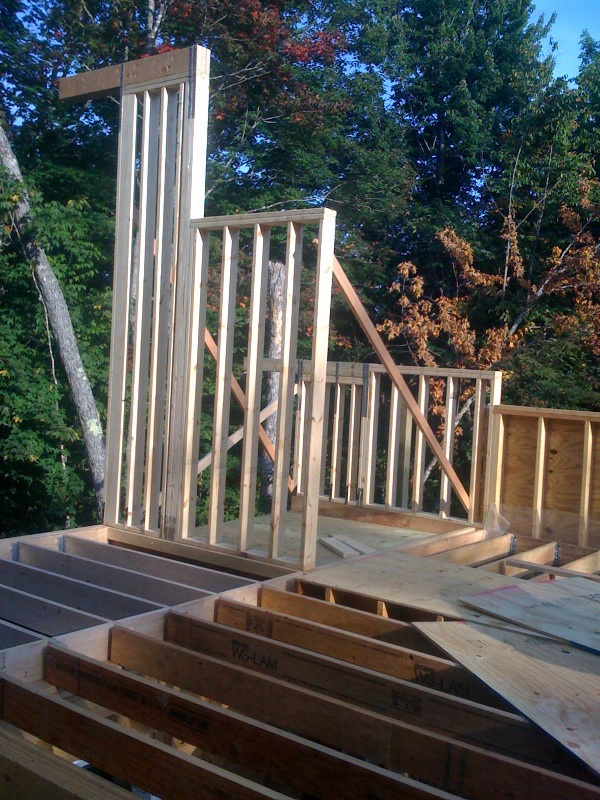 Load bearing walls support and transfer significant loads. These loads are often transferred directly to the foundations of the home, or a load bearing wall may be supported by a floor structure or beam. If a wall supports a roof, floor, or some other permanent structure, it is considered load bearing. Virtually all exterior perimeter walls of a typical home are load bearing, as they usually support a roof and enclose the interior of the home. If an interior wall simply separates two interior rooms and supports no floor, roof, diaphragm, or other load, it is non load bearing.
Due to interior finishes and the various structure possibilities, the distinction between load bearing and non load bearing is not always obvious. The determination should be made by a qualified professional via a plan review and/or inspection. The removal, modification or damage to a load bearing wall has the potential for serious, even dangerous consequences. The removal or modification of even non-load bearing walls has the potential for effects on electrical, plumbing, or other utility lines.
Framed walls are found at both the interior and exterior (perimeter) walls of many homes. Concrete masonry unit (CMU) is normally found at exterior walls but may also exist at the interior, particularly when an older home has had past additions. Solid reinforced concrete is another method of wall construction and more commonly found at construction detached from the home, such as fences, retaining walls, privacy walls, or seawalls.
Loads vary with the type and location of the wall and supported elements. Loads are commonly induced by gravity, wind, and earth. Under most conditions, gravity loads from the weight of the roof and floor structures and their supported elements are carried by girders, beams and/or walls. Under high wind conditions, the weight of the supported structure may be surpassed by the force from uplift pressure on the roof. In this case, the load on the walls supporting the roof is reversed, and the supporting walls (or columns) must resist an uplift load together with their foundations. Wind also causes lateral (horizontal) pressure against the exterior walls of a home. Earth pressure must be restrained if a wall is partially or completely buried on one side more than the other. Some walls are subjected to shear forces which must be restrained to prevent lateral movement or overturning.
As with any structural component or system, problems may arise from improper construction, damage, or deterioration of a load bearing wall. Some common problems with walls and their causes are discussed in Common Problems and Diagnosis.
Load bearing walls support and transfer significant loads. These loads are often transferred directly to the foundations of the home, or a load bearing wall may be supported by a floor structure or beam. If a wall supports a roof, floor, or some other permanent structure, it is considered load bearing. Virtually all exterior perimeter walls of a typical home are load bearing, as they usually support a roof and enclose the interior of the home. If an interior wall simply separates two interior rooms and supports no floor, roof, diaphragm, or other load, it is non load bearing.
Due to interior finishes and the various structure possibilities, the distinction between load bearing and non load bearing is not always obvious. The determination should be made by a qualified professional via a plan review and/or inspection. The removal, modification or damage to a load bearing wall has the potential for serious, even dangerous consequences. The removal or modification of even non-load bearing walls has the potential for effects on electrical, plumbing, or other utility lines.
Framed walls are found at both the interior and exterior (perimeter) walls of many homes. Concrete masonry unit (CMU) is normally found at exterior walls but may also exist at the interior, particularly when an older home has had past additions. Solid reinforced concrete is another method of wall construction and more commonly found at construction detached from the home, such as fences, retaining walls, privacy walls, or seawalls.
Loads vary with the type and location of the wall and supported elements. Loads are commonly induced by gravity, wind, and earth. Under most conditions, gravity loads from the weight of the roof and floor structures and their supported elements are carried by girders, beams and/or walls. Under high wind conditions, the weight of the supported structure may be surpassed by the force from uplift pressure on the roof. In this case, the load on the walls supporting the roof is reversed, and the supporting walls (or columns) must resist an uplift load together with their foundations. Wind also causes lateral (horizontal) pressure against the exterior walls of a home. Earth pressure must be restrained if a wall is partially or completely buried on one side more than the other. Some walls are subjected to shear forces which must be restrained to prevent lateral movement or overturning.
As with any structural component or system, problems may arise from improper construction, damage, or deterioration of a load bearing wall. Some common problems with walls and their causes are discussed in Common Problems and Diagnosis.