Concrete Slab on Grade Floor Structure
2011-09-16
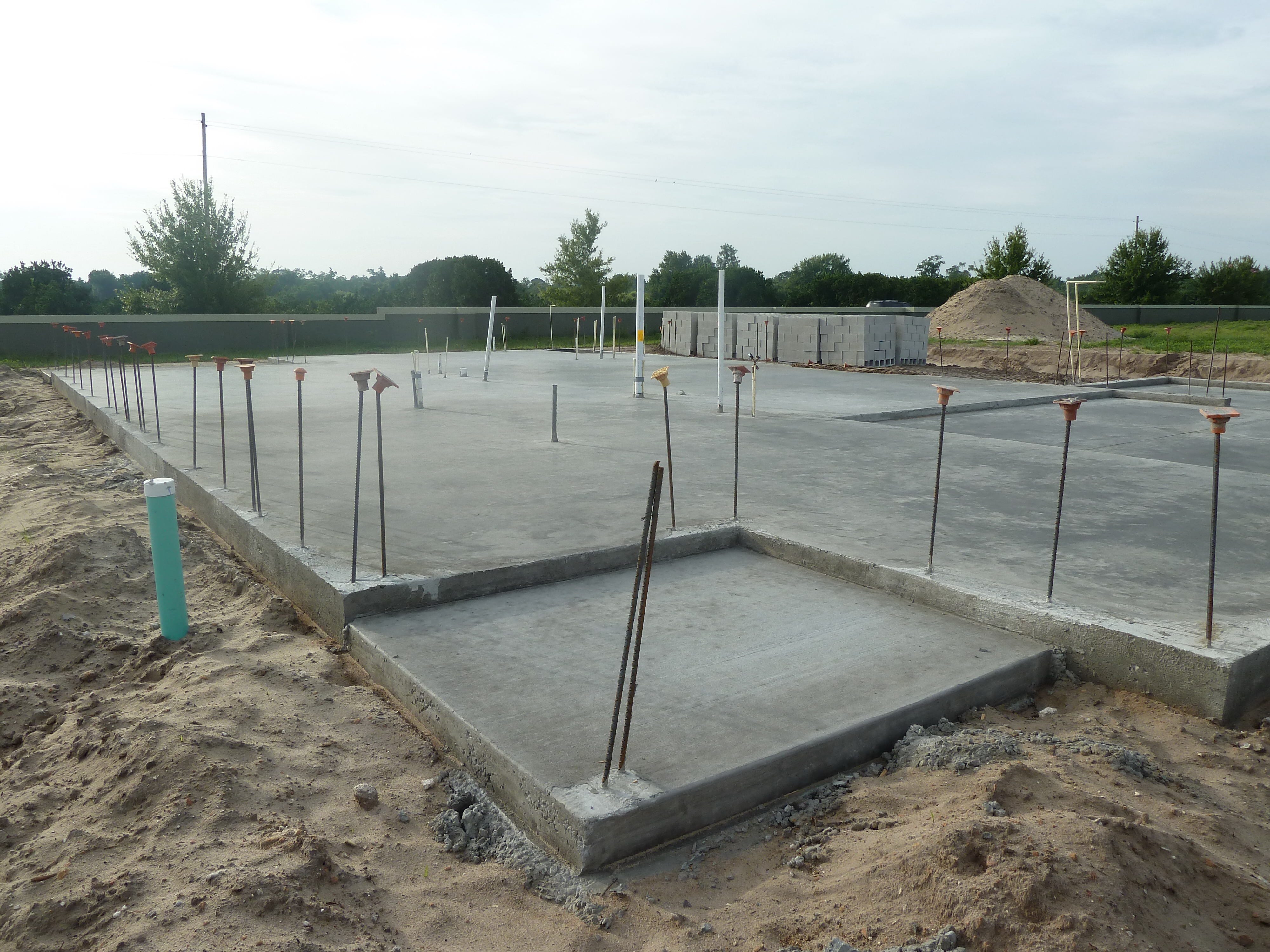
A concrete slab on grade is what its name implies: a slab of concrete placed directly on the ground, or grade. The focus here will be slabs that are unreinforced or reinforced only with welded wire fabric (WWF). These slabs are supported directly by the soil immediately beneath the concrete. Such slabs are commonly used for sidewalks, driveways, pool and patio decks, and the interior first floor of a home. A typical residential concrete slab is 4” thick, but thickness varies depending upon the intended use and the building code in effect at the time of construction.
A concrete slab on grade has several advantages over a wood framed floor:
- A concrete slab is nearly impervious to rot, decay, and insect damage.
- The inherent mass of a concrete slab makes it solid and stable, with little or no discernable deflection due to normal loads. This quality can be readily perceived by the home’s occupants.
- A properly constructed slab on grade will almost always provide more weight bearing capacity than a wood framed floor.
- Concrete does not burn.
- Construction can be more labor and material intensive than a wood framed floor.
- All subfloor plumbing and electrical work must be done prior to slab placement.
- A concrete slab may be susceptible to spalling from corrosion of steel reinforcement, if existing. This issue is discussed here.
- Land cleared and deleterious soils or organic material removed if necessary. Clean sand or gravel is sometimes brought in to elevate property, or replace materials removed for the purposes of improving drainage or soil bearing characteristics.
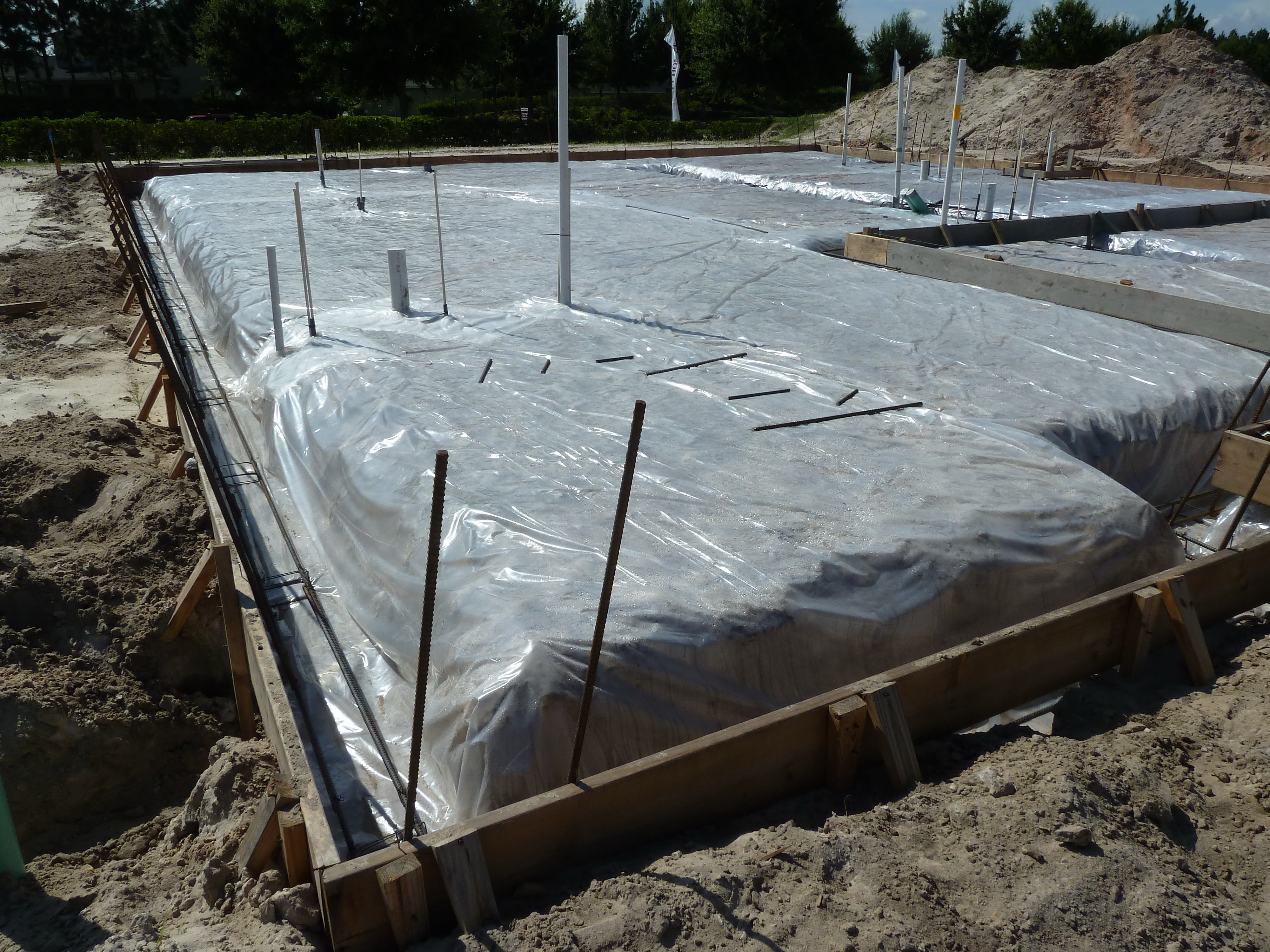
- Form boards placed around the perimeter of the intended slab and staked into the ground.
- Non monolithic footings, such as strip footings and some isolated footings, are placed prior to the slab on grade. Monolithic footings (placed with the slab) are dug out to the specified depth and width. Footings are located below the exterior walls of a home (perimeter) and may also be provided below interior load bearing walls and posts.
- Trenches are dug for plumbing and electrical conduits then covered with soil. Conduits are sometimes placed atop the plastic vapor retarder discussed below.
- Soil (beneath intended slab and monolithic footings) is compacted. This is often done with a hand operated machine that basically consists of a motor on top of a steel plate. Water is often used to help compact dry soils.
- Soil is treated for pest prevention, if required by the local building code.
- Continuous plastic sheeting is placed as a vapor retarder directly on top of the soil.
- Reinforcing steel, typically in the form of WWF, is placed on top of the plastic. Fiber reinforced concrete is sometimes used in lieu of reinforcing steel.
- The concrete is usually placed directly with a chute extending from a truck or pumped through a hose to the slab. During placement, the concrete should be consolidated properly to avoid honeycomb or air pockets.
- The top surface of the slab is screeded, leveled, floated, and given the desired finish.
- The new concrete slab is left to cure. During the early stages of the curing process (generally between 4 and 24 hours), contraction joints may be tooled, formed, or sawn into the slab.