Crawlspace Ventilation Requirements
2012-01-03
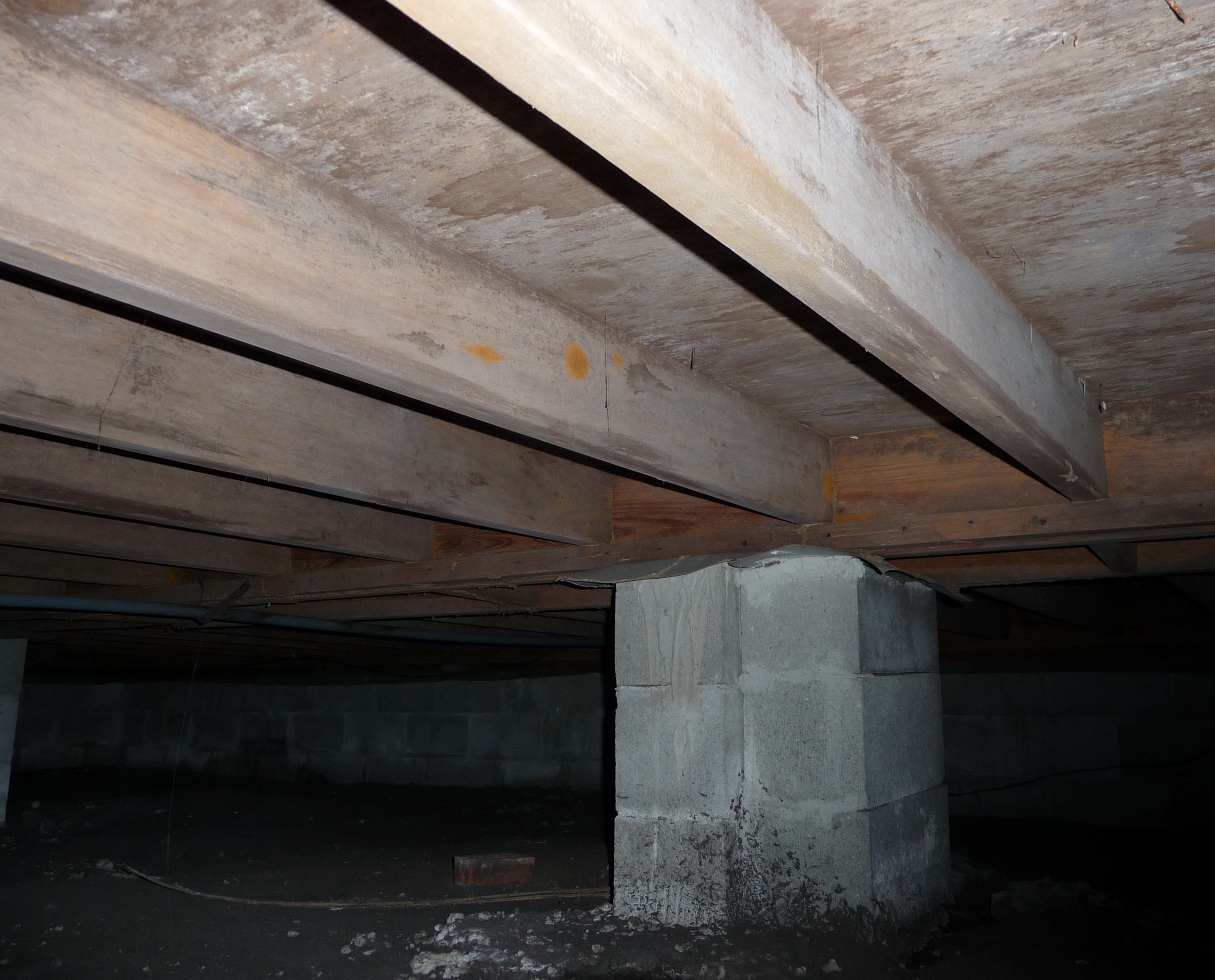 Crawl spaces exist beneath homes that have an elevated 1st floor structure (such as joists or trusses) with no basement. There are several possible indicators that a crawlspace exists. Perhaps the most obvious is access or ventilation openings at the lower exterior walls around the perimeter of the home. These openings are sometimes covered by foliage or landscaping and not easily visible. Or they may be improperly covered up during a past renovation, addition, or exterior painting. Another potential indicator of a crawlspace is a significant vertical elevation difference between exterior grade and first floor. The surface of a typical slab on grade is usually not much more than 8" above the exterior grade. A framed or truss floor structure over a crawl space may also have a slight 'bouncy feel' as compared with the more 'solid feel' of a slab on grade.
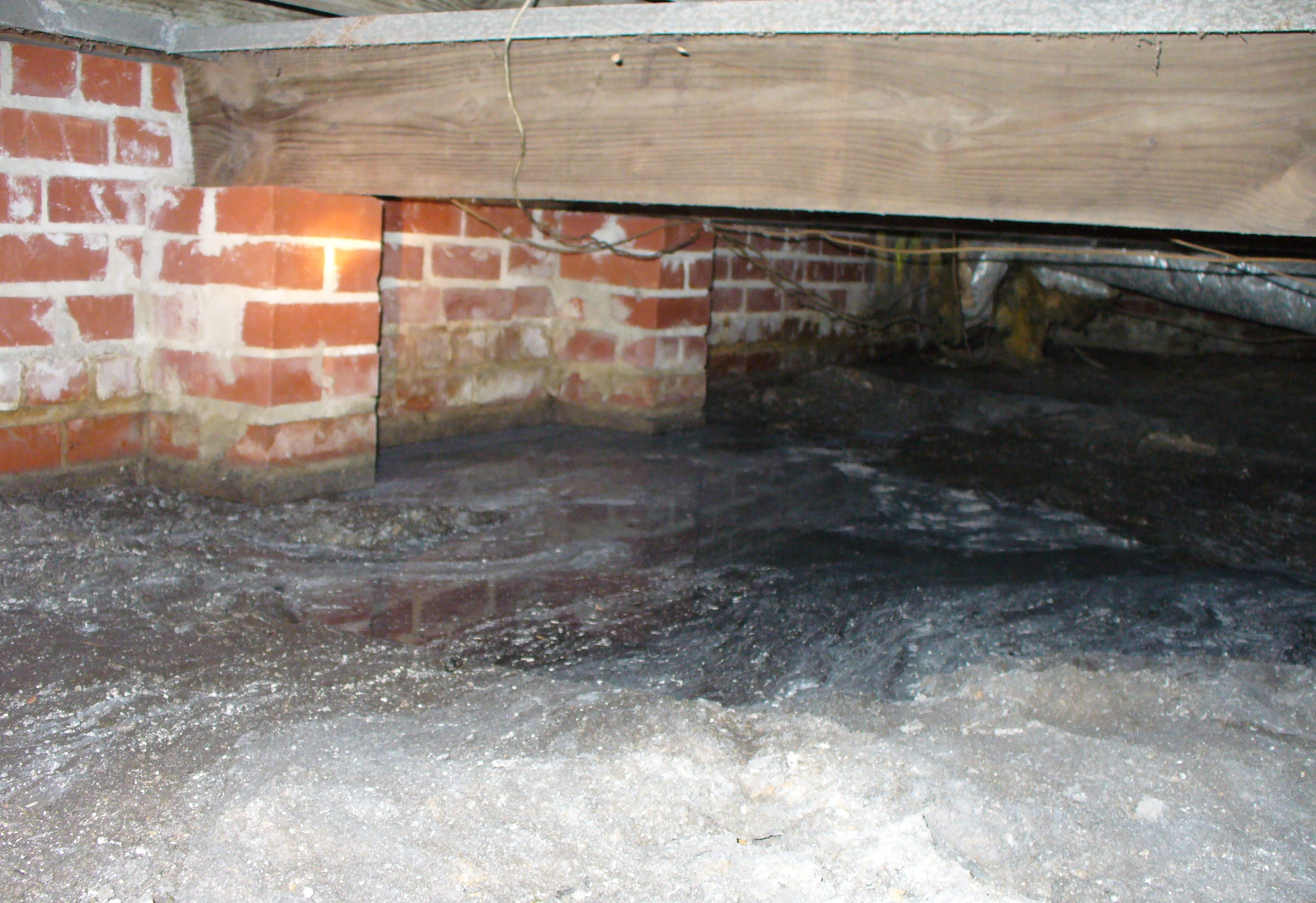 Over time, as the affected floor sheathing, beams, joists, trusses, etc. deteriorate due to high moisture conditions, they often deflect under load. This deflection may be the first noticeable manifestation of damage or a problem. It may be directly noticeable in the residence above as a visibly deflected or 'spongy feeling' floor area. Other manifestations of deflection may include cracks or gaps in finish flooring, walls, and ceilings. A deflected floor structure may also cause damage to attached plumbing, condensate, or electrical conduits.
The 2010 Florida Building Code (FBC), Residential is the current building code in effect for new construction, and is useful as a reference in evaluating the adequacy of crawlspace ventilation under an existing home. The following paragraphs are pertinent:
Over time, as the affected floor sheathing, beams, joists, trusses, etc. deteriorate due to high moisture conditions, they often deflect under load. This deflection may be the first noticeable manifestation of damage or a problem. It may be directly noticeable in the residence above as a visibly deflected or 'spongy feeling' floor area. Other manifestations of deflection may include cracks or gaps in finish flooring, walls, and ceilings. A deflected floor structure may also cause damage to attached plumbing, condensate, or electrical conduits.
The 2010 Florida Building Code (FBC), Residential is the current building code in effect for new construction, and is useful as a reference in evaluating the adequacy of crawlspace ventilation under an existing home. The following paragraphs are pertinent:
R408.1 Ventilation. The under-floor space between the bottom of the floor joists and the earth under any building (except space occupied by a basement) shall have ventilation openings through foundation walls or exterior walls. The minimum net area of ventilation openings shall not be less than 1 square foot (0.0929 m2) for each 150 square feet (14 m2) of under-floor space area, unless the ground surface is covered by a Class 1 vapor retarder material. When a Class 1 vapor retarder material is used, the minimum net area of ventilation openings shall not be less than 1 square foot (0.0929 m2) for each 1,500 square feet (140 m2) of under-floor space area. One such ventilating opening shall be within 3 feet (914 mm) of each corner of the building.
Exception: Crawl spaces designed by a Florida licensed engineer or registered architect to eliminate the venting.
R408.2 Openings for under-floor ventilation. The minimum net area of ventilation openings shall not be less than 1 square foot (0.0929 m2) for each 150 square feet (14 m2) of under floor area. One ventilation opening shall be within 3 feet (915 mm) of each corner of the building. Ventilation openings shall be covered for their height and width with any of the following materials provided that the least dimension of the covering shall not exceed 1/4 (6.4 mm):
- Perforated sheet metal plates not less than 0.070 inch (1.8 mm) thick.
- Expanded sheet metal plates not less than 0.047 inch (1.2 mm) thick.
- Cast-iron grill or grating.
- Extruded load-bearing brick vents.
- Hardware cloth of 0.035 inch (0.89 mm) wire or heavier.
- Corrosion-resistant wire mesh, with the least dimension being 1/8 inch (3.2 mm) thick.
Exception: The total area of ventilation openings shall be permitted to be reduced to 1/1,500 of the under-floor area where the ground surface is covered with an approved Class 1 vapor retarder material and the required openings are placed to provide cross ventilation of the space. The installation of operable louvers shall not be prohibited.
R408.3 Unvented crawl space. Ventilation openings in under-floor spaces specified in Sections R408.1 and R408.2 shall not be required where:
- Exposed earth is covered with a continuous Class 1 vapor retarder. Joints of the vapor retarder shall overlap by 6 inches (152 mm) up the stem wall and shall be attached and sealed to the stem wall; and
- One of the following is provided for the under-floor space:
- 2.1 Continuously operated mechanical exhaust ventilation at a rate equal to 1 cubic foot per minute (0.47 L/s) for each 50 square feet (4.7 m2) of crawlspace floor area (such as a duct or transfer grille), and perimeter walls insulated in accordance with Section 402.2.9 of the FBC, Energy Conservation;
- 2.2 Conditioned air supply sized to deliver at a rate equal to 1 cubic foot per minute (0.47 L/s) for each 50 square feet (4.7 m2) of under-floor area, including a return air pathway to the common area (such as a duct or transfer grille), and perimeter walls insulated in accordance with Section 402.2.9 of the FBC, Energy Conservation;
- 2.3 Plenum in existing structures complying with Section M1601.5, if under-floor space is used as plenum.
R408.4 Access. Access shall be provided to all under-floor spaces. Access openings through the floor shall be a minimum of 18 inches by 24 inches (457 mm by 610 mm). Openings through a perimeter wall shall be not less than 16 inches by 24 inches (407 mm by 610 mm). When any portion of the through-wall access is below grade, an areaway not less than 16 inches by 24 inches (407 mm by 610 mm) shall be provided. The bottom of the areaway shall be below the threshold of the access opening. Through wall access openings shall not be located under a door to the residence. See Section M1305.1.4 for access requirements where mechanical equipment is located under floors.