Cracks in Ceramic Floor Tile
2011-10-24
Tile is widely used for finish floors and wall covering in tubs, showers, and pools. Ceramic tile is primarily composed of kiln-fired clay, usually with one surface glazed. It is a brittle material and is therefore prone to cracking.
 Ceramic tiles are usually installed over wood floor sheathing using a mortar bed, cement boards, or plywood underlayment between the tile and the wood sub floor. The maximum deflection of the sub floor due to live loads should typically not exceed 1/360, i.e. one inch deflection over a 30 foot span. Care should be taken due to the tendency of wood to deflect with applied loads, and shrink or swell with changing moisture content.
Ceramic floor tiles properly installed over hand framed or wood truss floor structures are still prone to cracking and/or 'debonding' due to excessive deflection, or sagging, of the floor structure. Deflection significant enough to cause properly installed floor tiles to crack may be an indication of a serious problem with the floor structure. Ceramic floor tiles installed over a wood floor structure are not considered in further detail here.
Ceramic floor tiles are also commonly installed over a concrete slab on grade. There are different methods of installing ceramic tile over a slab. One method involves the use of a thicker mortar bed over a cleavage membrane, which allows the tile and mortar bed to 'float' over the slab. Another method uses an isolation membrane with thinset mortar. These two methods are not considered in further detail here.
A third tile-to-slab installation method uses thinset mortar to directly adhere ceramic tiles to an exposed concrete slab surface. This method is widely used because it is generally fast and relatively inexpensive. One common cause of cracks in directly adhered floor tiles is cracking of the slab beneath the tile. If a tile is directly bonded to the slab, a crack in the slab that develops or increases in width may radiate or reflect up through the tile. The aforementioned cleavage or isolation membranes are employed to help prevent this type of cracking.
Many cracks in concrete slabs originate in concrete shrinkage. These cracks may not be structurally significant as it is concrete's nature to crack due to several reasons discussed in the previous link. A concrete slab on grade may also crack due to significant settlement, which is often a long term process and is usually related to inadequate support from the soil beneath the slab. Significant differential settlement is a structural problem that should be remedied.
Floor tile cracks may also be related to the loss of bond between the floor tile and the slab. Loss of bond may result in loose or even tented floor tiles. Floor tiles affected in this way may not be fully supported by the underlying mortar, which increases their susceptibility to cracking due to foot traffic and other normal loads. Loose floor tiles usually produce a different sound when tapped. A bonded tile produces a solid ringing sound while a debonded tile sounds hollow.
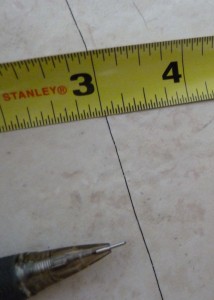
The following photograph shows a reflective crack in ceramic floor tiles directly adhered to a concrete slab. This crack extends across grout joints, and the tiles adjacent to the crack produce a solid ringing sound when tapped. No visible or measurable displacement across the crack indicates that the crack is the result of a shrinkage crack in the slab below.
Ceramic tiles are usually installed over wood floor sheathing using a mortar bed, cement boards, or plywood underlayment between the tile and the wood sub floor. The maximum deflection of the sub floor due to live loads should typically not exceed 1/360, i.e. one inch deflection over a 30 foot span. Care should be taken due to the tendency of wood to deflect with applied loads, and shrink or swell with changing moisture content.
Ceramic floor tiles properly installed over hand framed or wood truss floor structures are still prone to cracking and/or 'debonding' due to excessive deflection, or sagging, of the floor structure. Deflection significant enough to cause properly installed floor tiles to crack may be an indication of a serious problem with the floor structure. Ceramic floor tiles installed over a wood floor structure are not considered in further detail here.
Ceramic floor tiles are also commonly installed over a concrete slab on grade. There are different methods of installing ceramic tile over a slab. One method involves the use of a thicker mortar bed over a cleavage membrane, which allows the tile and mortar bed to 'float' over the slab. Another method uses an isolation membrane with thinset mortar. These two methods are not considered in further detail here.
A third tile-to-slab installation method uses thinset mortar to directly adhere ceramic tiles to an exposed concrete slab surface. This method is widely used because it is generally fast and relatively inexpensive. One common cause of cracks in directly adhered floor tiles is cracking of the slab beneath the tile. If a tile is directly bonded to the slab, a crack in the slab that develops or increases in width may radiate or reflect up through the tile. The aforementioned cleavage or isolation membranes are employed to help prevent this type of cracking.
Many cracks in concrete slabs originate in concrete shrinkage. These cracks may not be structurally significant as it is concrete's nature to crack due to several reasons discussed in the previous link. A concrete slab on grade may also crack due to significant settlement, which is often a long term process and is usually related to inadequate support from the soil beneath the slab. Significant differential settlement is a structural problem that should be remedied.
Floor tile cracks may also be related to the loss of bond between the floor tile and the slab. Loss of bond may result in loose or even tented floor tiles. Floor tiles affected in this way may not be fully supported by the underlying mortar, which increases their susceptibility to cracking due to foot traffic and other normal loads. Loose floor tiles usually produce a different sound when tapped. A bonded tile produces a solid ringing sound while a debonded tile sounds hollow.
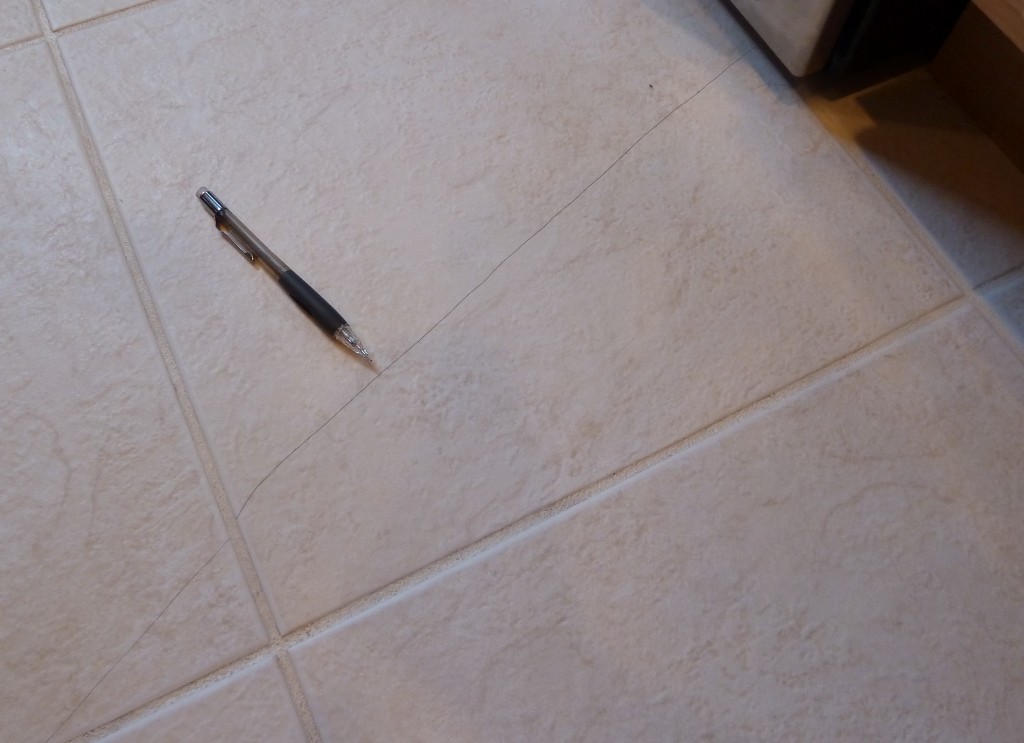
The following photograph shows a reflective crack in ceramic floor tiles directly adhered to a concrete slab. This crack extends across grout joints, and the tiles adjacent to the crack produce a solid ringing sound when tapped. No visible or measurable displacement across the crack indicates that the crack is the result of a shrinkage crack in the slab below.
 ADDITIONAL RESOURCES:
TCNA Handbook for Ceramic, Glass, and Stone Tile Installation
ANSI A108/A118/A136.1 - Specifications for the Installation of Ceramic Tile
ANSI A137.1 - Specifications for Ceramic Tile
ADDITIONAL RESOURCES:
TCNA Handbook for Ceramic, Glass, and Stone Tile Installation
ANSI A108/A118/A136.1 - Specifications for the Installation of Ceramic Tile
ANSI A137.1 - Specifications for Ceramic Tile
 Ceramic tiles are usually installed over wood floor sheathing using a mortar bed, cement boards, or plywood underlayment between the tile and the wood sub floor. The maximum deflection of the sub floor due to live loads should typically not exceed 1/360, i.e. one inch deflection over a 30 foot span. Care should be taken due to the tendency of wood to deflect with applied loads, and shrink or swell with changing moisture content.
Ceramic floor tiles properly installed over hand framed or wood truss floor structures are still prone to cracking and/or 'debonding' due to excessive deflection, or sagging, of the floor structure. Deflection significant enough to cause properly installed floor tiles to crack may be an indication of a serious problem with the floor structure. Ceramic floor tiles installed over a wood floor structure are not considered in further detail here.
Ceramic floor tiles are also commonly installed over a concrete slab on grade. There are different methods of installing ceramic tile over a slab. One method involves the use of a thicker mortar bed over a cleavage membrane, which allows the tile and mortar bed to 'float' over the slab. Another method uses an isolation membrane with thinset mortar. These two methods are not considered in further detail here.
A third tile-to-slab installation method uses thinset mortar to directly adhere ceramic tiles to an exposed concrete slab surface. This method is widely used because it is generally fast and relatively inexpensive. One common cause of cracks in directly adhered floor tiles is cracking of the slab beneath the tile. If a tile is directly bonded to the slab, a crack in the slab that develops or increases in width may radiate or reflect up through the tile. The aforementioned cleavage or isolation membranes are employed to help prevent this type of cracking.
Many cracks in concrete slabs originate in concrete shrinkage. These cracks may not be structurally significant as it is concrete's nature to crack due to several reasons discussed in the previous link. A concrete slab on grade may also crack due to significant settlement, which is often a long term process and is usually related to inadequate support from the soil beneath the slab. Significant differential settlement is a structural problem that should be remedied.
Floor tile cracks may also be related to the loss of bond between the floor tile and the slab. Loss of bond may result in loose or even tented floor tiles. Floor tiles affected in this way may not be fully supported by the underlying mortar, which increases their susceptibility to cracking due to foot traffic and other normal loads. Loose floor tiles usually produce a different sound when tapped. A bonded tile produces a solid ringing sound while a debonded tile sounds hollow.
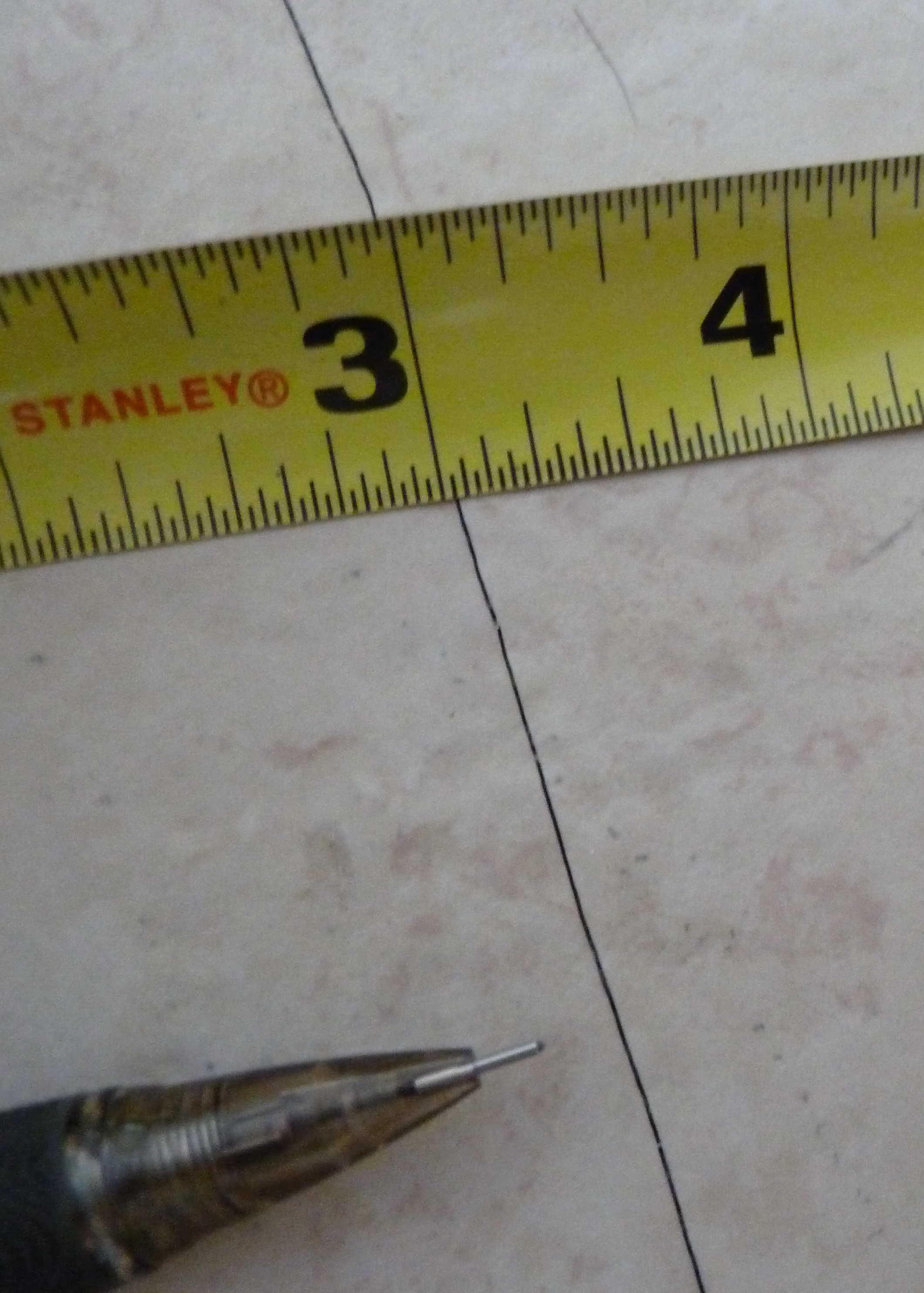
The following photograph shows a reflective crack in ceramic floor tiles directly adhered to a concrete slab. This crack extends across grout joints, and the tiles adjacent to the crack produce a solid ringing sound when tapped. No visible or measurable displacement across the crack indicates that the crack is the result of a shrinkage crack in the slab below.
Ceramic tiles are usually installed over wood floor sheathing using a mortar bed, cement boards, or plywood underlayment between the tile and the wood sub floor. The maximum deflection of the sub floor due to live loads should typically not exceed 1/360, i.e. one inch deflection over a 30 foot span. Care should be taken due to the tendency of wood to deflect with applied loads, and shrink or swell with changing moisture content.
Ceramic floor tiles properly installed over hand framed or wood truss floor structures are still prone to cracking and/or 'debonding' due to excessive deflection, or sagging, of the floor structure. Deflection significant enough to cause properly installed floor tiles to crack may be an indication of a serious problem with the floor structure. Ceramic floor tiles installed over a wood floor structure are not considered in further detail here.
Ceramic floor tiles are also commonly installed over a concrete slab on grade. There are different methods of installing ceramic tile over a slab. One method involves the use of a thicker mortar bed over a cleavage membrane, which allows the tile and mortar bed to 'float' over the slab. Another method uses an isolation membrane with thinset mortar. These two methods are not considered in further detail here.
A third tile-to-slab installation method uses thinset mortar to directly adhere ceramic tiles to an exposed concrete slab surface. This method is widely used because it is generally fast and relatively inexpensive. One common cause of cracks in directly adhered floor tiles is cracking of the slab beneath the tile. If a tile is directly bonded to the slab, a crack in the slab that develops or increases in width may radiate or reflect up through the tile. The aforementioned cleavage or isolation membranes are employed to help prevent this type of cracking.
Many cracks in concrete slabs originate in concrete shrinkage. These cracks may not be structurally significant as it is concrete's nature to crack due to several reasons discussed in the previous link. A concrete slab on grade may also crack due to significant settlement, which is often a long term process and is usually related to inadequate support from the soil beneath the slab. Significant differential settlement is a structural problem that should be remedied.
Floor tile cracks may also be related to the loss of bond between the floor tile and the slab. Loss of bond may result in loose or even tented floor tiles. Floor tiles affected in this way may not be fully supported by the underlying mortar, which increases their susceptibility to cracking due to foot traffic and other normal loads. Loose floor tiles usually produce a different sound when tapped. A bonded tile produces a solid ringing sound while a debonded tile sounds hollow.
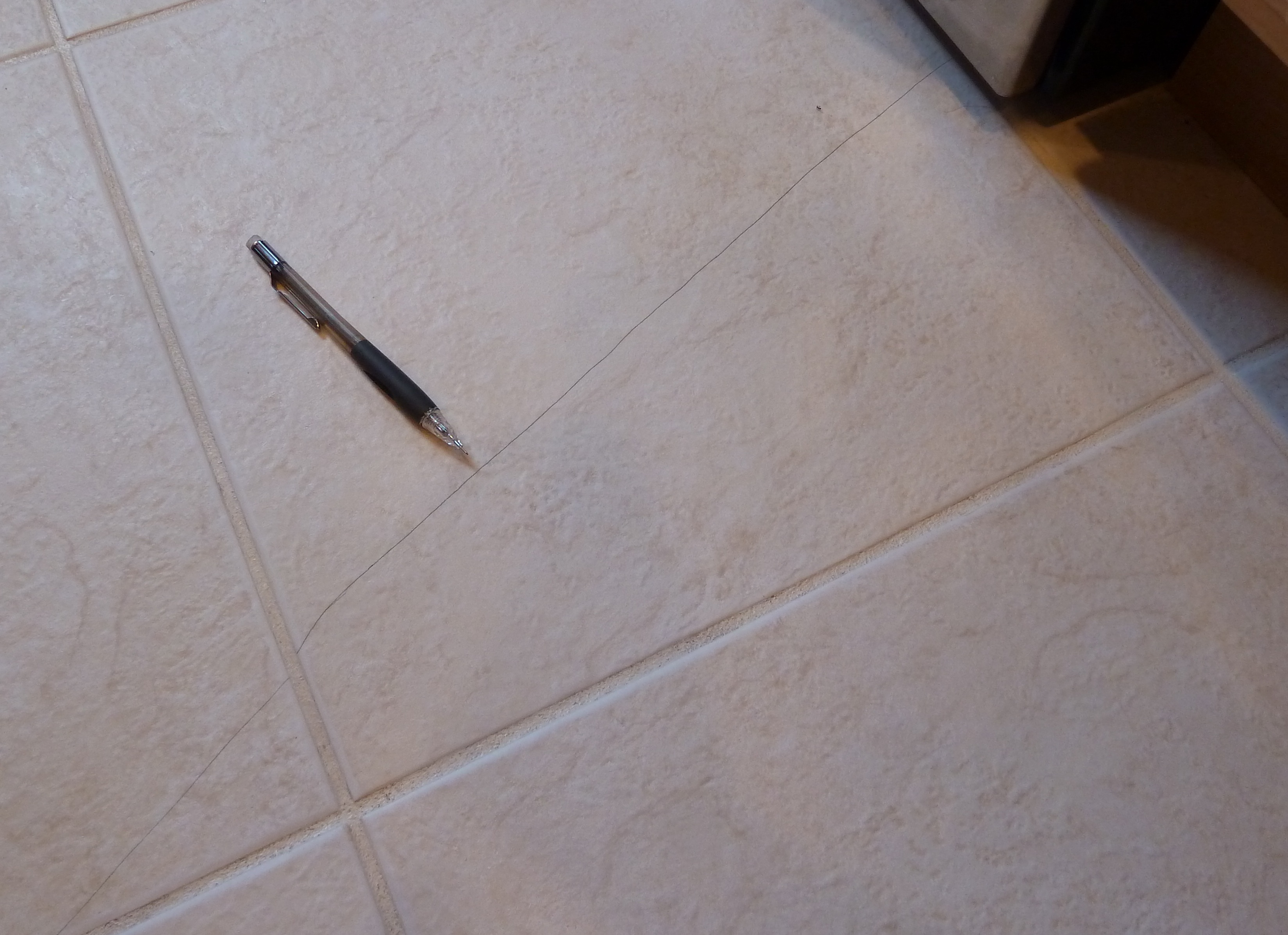
The following photograph shows a reflective crack in ceramic floor tiles directly adhered to a concrete slab. This crack extends across grout joints, and the tiles adjacent to the crack produce a solid ringing sound when tapped. No visible or measurable displacement across the crack indicates that the crack is the result of a shrinkage crack in the slab below.
 ADDITIONAL RESOURCES:
TCNA Handbook for Ceramic, Glass, and Stone Tile Installation
ANSI A108/A118/A136.1 - Specifications for the Installation of Ceramic Tile
ANSI A137.1 - Specifications for Ceramic Tile
ADDITIONAL RESOURCES:
TCNA Handbook for Ceramic, Glass, and Stone Tile Installation
ANSI A108/A118/A136.1 - Specifications for the Installation of Ceramic Tile
ANSI A137.1 - Specifications for Ceramic Tile