Structural Repairs to Existing Buildings
2011-11-12
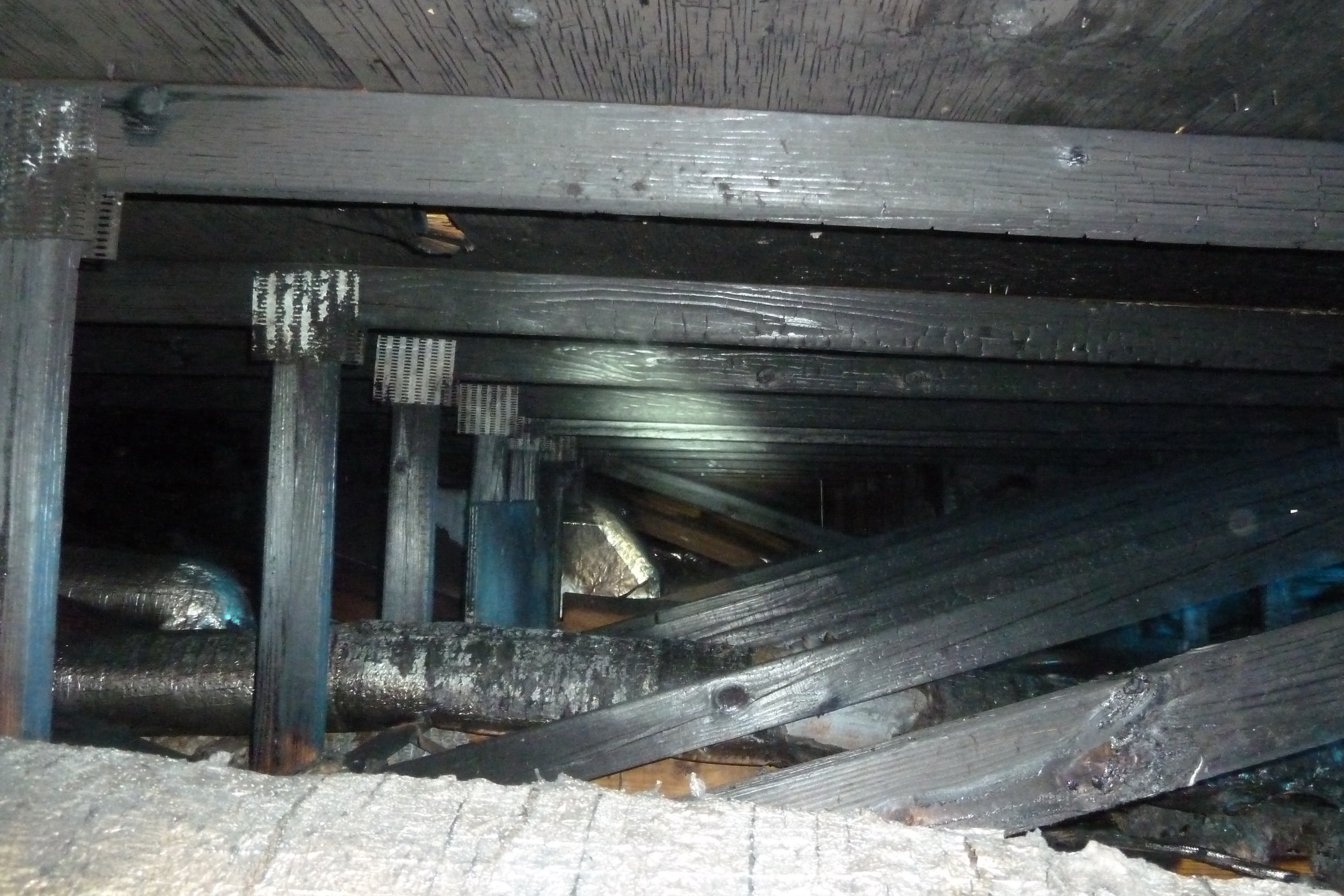 This section pertains to homes or other buildings that have sustained serious damage, and discusses some of the requirements regarding the repairs to such damage. The Florida Building Code (FBC), Existing Building applies “to the repair, alteration, change of occupancy, addition, and relocation of existing buildings”. Chapter 5 of this code applies specifically to repairs. Specific terms are defined within this chapter that determine the extent of repairs required, including potential upgrades required where building damage exceeds certain thresholds.
Dangerous Conditions
Obviously, dangerous conditions must be corrected. The 2010 FBC, Existing Building paragraph 506.1 states the following with regard to dangerous conditions: “Regardless of the extent of structural or nonstructural damage, dangerous conditions shall be eliminated.” Chapter 2 of the FBC, Existing Building defines “Dangerous” as follows:
This section pertains to homes or other buildings that have sustained serious damage, and discusses some of the requirements regarding the repairs to such damage. The Florida Building Code (FBC), Existing Building applies “to the repair, alteration, change of occupancy, addition, and relocation of existing buildings”. Chapter 5 of this code applies specifically to repairs. Specific terms are defined within this chapter that determine the extent of repairs required, including potential upgrades required where building damage exceeds certain thresholds.
Dangerous Conditions
Obviously, dangerous conditions must be corrected. The 2010 FBC, Existing Building paragraph 506.1 states the following with regard to dangerous conditions: “Regardless of the extent of structural or nonstructural damage, dangerous conditions shall be eliminated.” Chapter 2 of the FBC, Existing Building defines “Dangerous” as follows:
"Any building, structure or portion thereof that meets any of the conditions described below shall be deemed dangerous:
1. The building or structure has collapsed, partially collapsed, moved off its foundation or lacks the support of ground necessary to support it.
2. There exists a significant risk of collapse, detachment or dislodgment of any portion, member, appurtenance or ornamentation of the building or structure under service loads."
Paragraph 402.3 states: "Work on nondamaged components that is necessary for the required repair of damaged components shall be considered part of the repair and shall not be subject to the provisions of Chapter 6, 7, 8, 9, or 10." This means that the 'Alteration' requirements do not apply to "repair only" work. Substantial Structural Damage Building codes have changed over the years, and the codes in Florida have generally become more stringent. An older building will likely not meet today's code requirements, and the FBC requires that if a building is damaged beyond certain thresholds, it should be rehabilitated to meet the current code if the nature and extent of damage meets certain criteria. This is particularly true if the building did not meet the code in effect at the time of its construction. The FBC defines the term 'Substantial Structural Damage' (SSD) which is used to determine what, if any, code upgrades must be incorporated as part of the repairs to a damaged building or structure. The FBC defines SSD as follows:"In any story, the elements of the lateral-force-resisting system (LFRS) have suffered damage such that the lateral load-carrying capacity of the structure in any horizontal direction has been reduced by more than 20 percent from its pre-damaged condition; or
The capacity of any vertical load-carrying component (VLCC), or any group of such components, that supports more than 30 percent of the structure's floors(s) and roof(s) has been reduced more than 20 percent from its predamaged condition and the remaining capacity of such affected elements, with respect to all dead and live loads, is less than 75 percent of that required by the FBC, Building for new buildings of similar structure, purpose and location."
Since the 2007 FBC took effect, SSD to elements of the LFRS vertical load-carrying components (VLCC) are considered separately in determining what, if any, upgrades are required as part of a repair. In the case where SSD exists the 2010 FBC, Existing Building requires the following: SSD to LFRS Simply put, the LFRS comprises those structural elements which resist lateral forces, such as wind or earth. If SSD occurs to elements of the LFRS, a structural evaluation is required that (506.2.2.1) “shall establish whether the damaged building, if repaired to its predamaged state, would comply with the provisions of the codes that were in effect when the building was permitted.” In the case of a compliant building (meaning the evaluation found that the pre-damaged building met the building code in effect at the time of its construction), the (506.2.2.2) "...damaged elements shall be permitted to be restored to their predamage condition.” This means that if the LFRS of an existing building sustains SSD, but the building's original construction met the building code in effect at the time of construction, the repairs to the LFRS elements do not need to incorporate code upgrades. However, the code also states (506.1) "Regardless of the scope of repair, new structural members and connections used for repair or rehabilitation shall comply with the detailing provisions of the FBC, Building for new buildings of similar structure, purpose and location.” In the case of a non-compliant building (meaning the evaluation found that the pre-damaged building did not meet the building code in effect at the time of its construction), the (506.2.2.3) “… building shall be rehabilitated to comply with the provisions of this section. The wind load for the repair and rehabilitation shall be those required by the building code in effect at the time of original construction, unless the damage was caused by wind, in which case the wind loads shall be in accordance with the FBC, Building.” SSD to Gravity Load Carrying Components (GLCC) The 2010 FBC, Existing Building states the following in paragraph 506.2.3: “Substantial structural damage to gravity load-carrying components. Gravity load-carrying components that have sustained substantial structural damage shall be rehabilitated to comply with the applicable provisions for dead and live loads in the FBC, Building. Undamaged gravity load-carrying components that receive dead or live loads from rehabilitated components shall also be rehabilitated if required to comply with the design loads of the rehabilitation design." As a side note, this use of the word "gravity" in the 2010 FBC is a change from the earlier editions, which used the word "vertical" (consistent with the SSD definition). Prior to the 2010 FBC taking effect, there was some question as to whether the word 'vertical' (in the definition of SSD to VLCC) referred to the direction of the load or the orientation of the component. Given the hyphenation (vertical load-carrying components) also used in previous codes, some believed that 'vertical' referred to the orientation of the component. This would exclude (horizontally orientated) roof trusses. Apparently, one may now assume that the code writers consider the words "vertical" and "gravity" to be essentially interchangeable, and the SSD definition with regard to VLCC applies to all GLCC, including trusses. The author requested a non-binding interpretation of these code provisions from the Building Officials Association of Florida (BOAF) and received the following response (Report Number 6889): "The key is a member that is carrying "vertical" load not whether the load carrying member is vertical." However, as stated on the BOAF website: "Such interpretations are to be advisory only and nonbinding on the parties or the commission." If SSD does not exist In the case where SSD does not exist, the FBC states the following in paragraph 506.2.1: “For damage less than SSD, the damaged elements shall be permitted to be restored to their predamage condition." Summary- If Dangerous – Regardless of extent of damage, dangerous condition must be eliminated.
- If Less Than Substantial Structural Damage, the building may be repaired to code in effect at time of construction, with all new structural members and connections meeting current FBC requirements.
- If Substantial Structural Damage, repair the lateral force resisting elements and vertical load carrying components to the extent indicated above.
- All new structural members and connections used in repairs must meet the detailing provisions of the current code.
